

Best Way to Whiten Teeth Safely in Dublin
The best way to whiten teeth is to begin with a dental assessment and use a whitening treatment supervised by a registered dentist. This allows the cause of the discolouration to be identified before any whitening product is applied.
The right option depends on your teeth, gums, existing dental restorations, sensitivity and the type of staining you want to improve. A method that works well for one person may not be appropriate for another.
Why a Dental Assessment Should Come First
Teeth can become darker for several reasons. Coffee, tea, red wine, smoking and strongly coloured foods can leave external stains, while ageing, previous trauma, medication and changes inside the tooth may cause deeper discolouration.
Before recommending whitening, a dentist should check for:
Tooth decay.
Gum inflammation or gum disease.
Cracked or damaged teeth.
Exposed roots.
Leaking fillings.
Existing tooth sensitivity.
Crowns, veneers, fillings or composite bonding.
Internal discolouration that may not respond normally.
Whitening should not be used to hide pain or an untreated dental problem. Treating the underlying issue first can make the whitening process safer and help establish a more realistic expectation of the result.
What Is the Best Way to Whiten Teeth?
For most suitable patients, the safest approach is professionally supervised teeth whitening planned by a dentist.
Professional whitening generally includes one of two approaches:
Dentist-Supervised Home Whitening
Your dentist takes impressions or digital scans to create trays that fit closely around your teeth. A prescribed whitening gel is placed inside the trays, which are worn according to the dentist’s instructions.
Treatment is gradual and commonly takes place over one or two weeks, although the exact schedule varies between patients and whitening systems.
Custom trays can help distribute the gel more evenly and reduce unnecessary contact with the gums. They may also be retained for future dentist-approved touch-ups.
The Irish Dental Association describes dentist-prescribed tray whitening as predictable in many suitable cases, while Irish oral-health guidance considers custom tray whitening a well-established treatment. dentalhealth.ie
In-Clinic Teeth Whitening
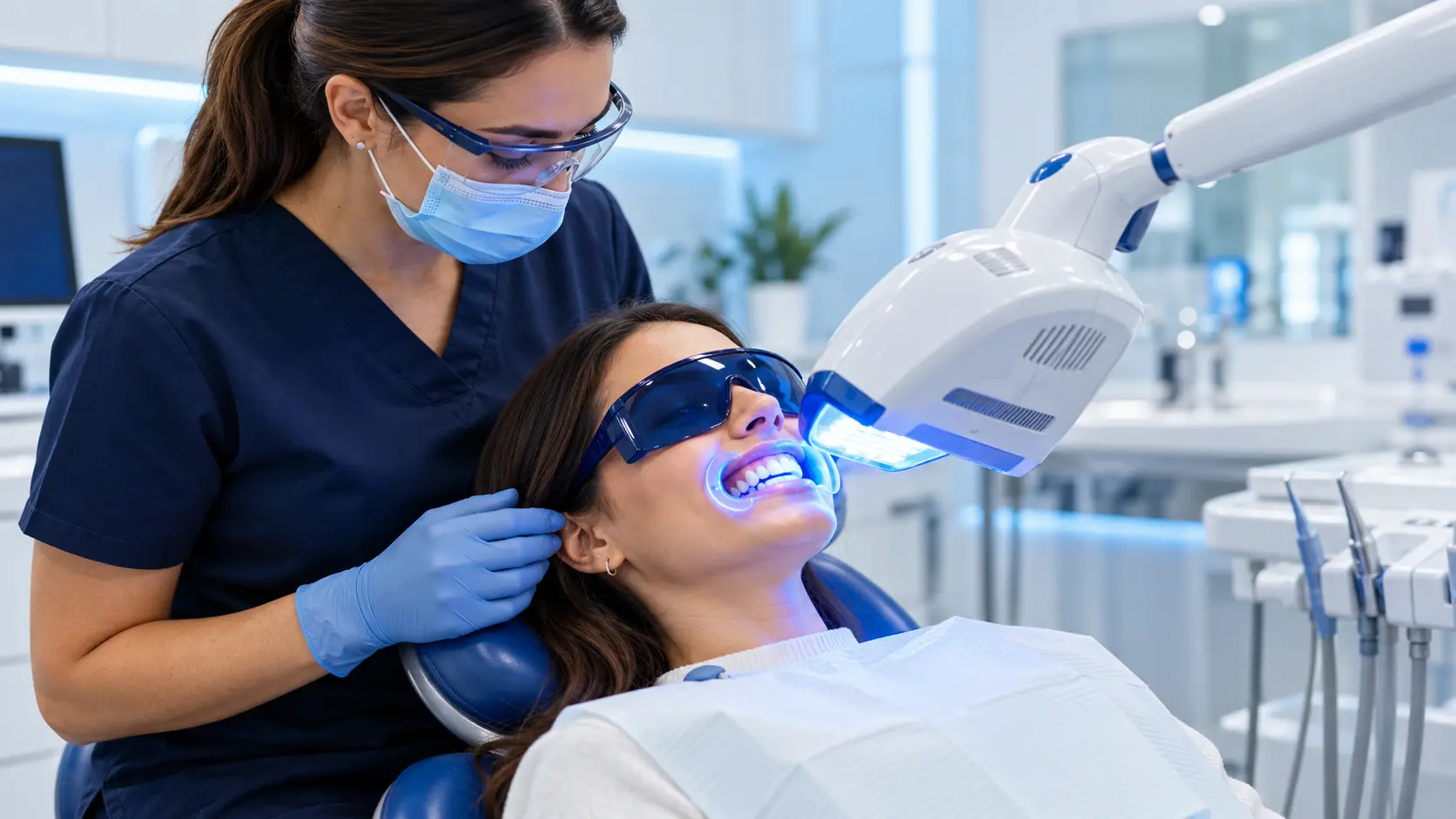
In-clinic whitening is completed at the dental practice. The gums and surrounding tissues are protected before whitening gel is applied to the natural teeth.
Some systems may use a light during the procedure, although the whitening gel remains responsible for changing the tooth colour. The term “laser whitening” is sometimes used broadly in advertising, but a light or laser does not automatically make one system better for every patient.
If you are comparing accelerated treatments, read our guide to laser teeth whitening in Dublin.
Freedom Dental provides both in-clinic and custom take-home options. You can explore the available professional teeth whitening treatments in Dublin before arranging an assessment.
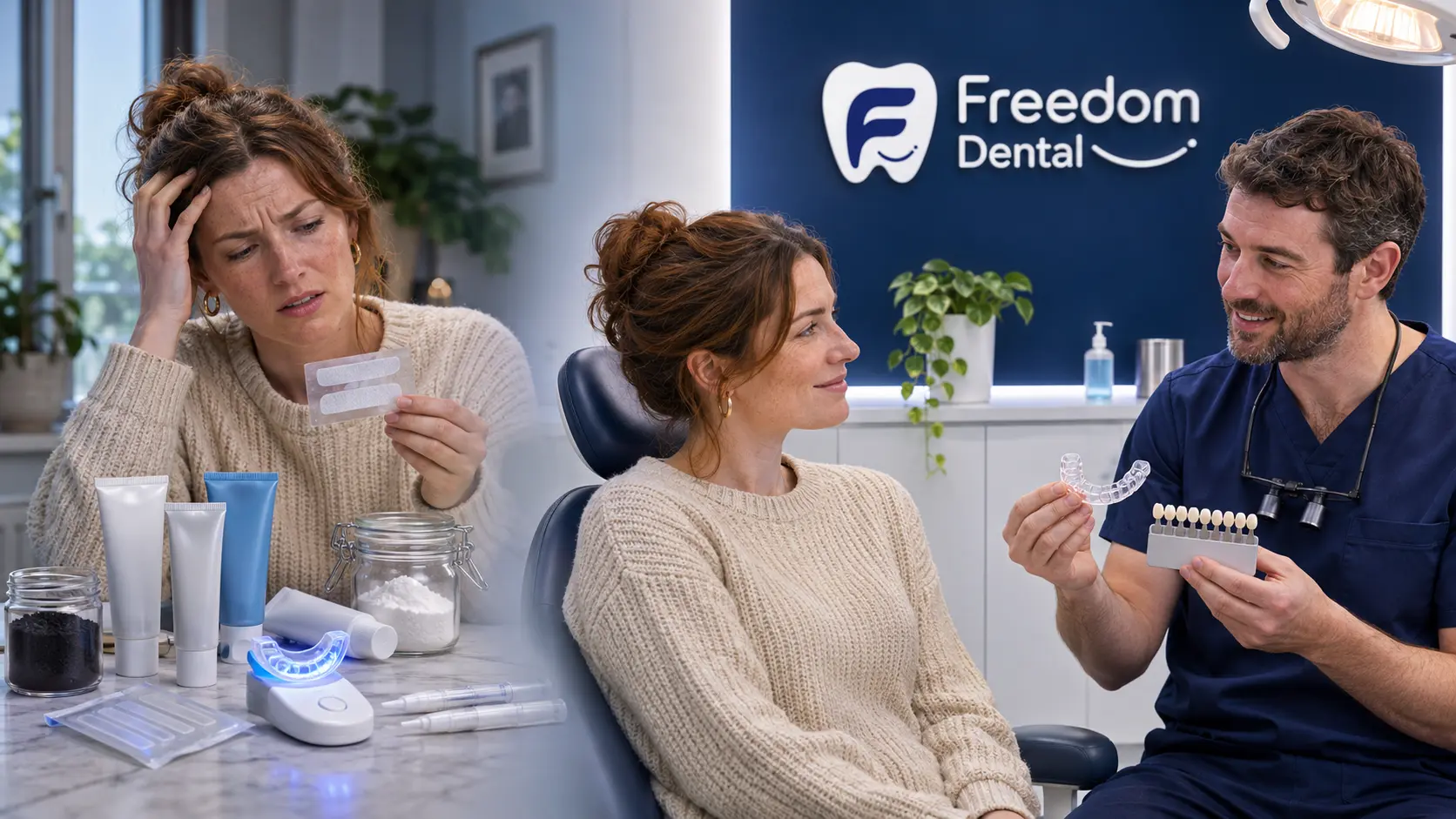
Professional Whitening Compared With Other Options
Whitening method | What it may do | Important limitation |
|---|---|---|
Dentist-supervised trays | Gradually lighten natural tooth colour | Requires consistent use as instructed |
In-clinic whitening | Provides professionally monitored treatment in the practice | Results still depend on the original shade and staining |
Whitening toothpaste | Removes some external surface stains | Does not significantly change the natural tooth colour |
Professional cleaning | Removes plaque, tartar and some surface staining | It is not a bleaching treatment |
Retail whitening strips | May produce a limited change in some cases | Fit, ingredients and suitability may vary |
Online whitening kits | Claims and ingredients differ significantly | Unregulated products may be ineffective or unsafe |
Natural remedies | Usually unsupported or unreliable | Acidic or abrasive methods may damage teeth |
Does Whitening Toothpaste Work?
Whitening toothpaste may help remove some surface staining caused by drinks, food or smoking. It does this mainly through cleaning or polishing ingredients rather than by changing the deeper natural colour of the tooth.
It may be useful for maintaining a professionally whitened smile, but it should not be expected to provide the same result as dentist-supervised peroxide whitening.
Highly abrasive toothpaste should not be overused. Aggressive abrasion does not safely bleach teeth and may contribute to enamel wear or gumline sensitivity.
Should You Have Your Teeth Cleaned Before Whitening?
Professional cleaning removes plaque, tartar and some external staining. In certain cases, teeth may already look noticeably fresher after these deposits are removed.
Cleaning and whitening have different purposes:
Cleaning removes deposits and surface stains.
Whitening changes the colour of natural tooth structure.
If plaque, tartar or gum inflammation is present, your dentist may recommend professional dental cleaning before whitening begins.
Our detailed guide explains whether you should clean your teeth before whitening.
Are Online Teeth Whitening Kits Safe?
Extra care is needed when purchasing whitening gels, strips or kits from social media pages and unfamiliar online sellers.
In Ireland, products containing or releasing more than 0.1% and up to 6% hydrogen peroxide must be supplied through a registered dentist, with the first use completed by or under the supervision of a dental practitioner. Products releasing more than 6% hydrogen peroxide are prohibited in the EU.
The HPRA has warned Irish consumers about illegal online whitening products containing peroxide concentrations above permitted EU limits. Potential effects can include tooth sensitivity, gum irritation, pain and chemical burns. hpra.ie
Check the product’s ingredients and labelling, avoid unknown sellers and consult a dentist before using a whitening product—especially if you already have sensitive teeth or dental restorations.
Can You Whiten Teeth Naturally?
Popular online remedies include lemon juice, baking soda, charcoal, vinegar and abrasive powders. These approaches are not a reliable substitute for professional whitening.
Acidic substances may soften or erode enamel, while abrasive products can wear the surface of the teeth if used repeatedly. Once enamel has been lost, it cannot be regrown through whitening.
Safer everyday habits include:
Brushing twice daily with fluoride toothpaste.
Cleaning between the teeth every day.
Attending regular examinations and cleaning.
Rinsing with water after coffee or tea.
Reducing smoking and tobacco use.
Limiting frequent exposure to strongly staining drinks.
These habits can reduce new surface staining, but they cannot always reverse established tooth discolouration.
Can Yellow Teeth Become White Again?
Many naturally yellow or externally stained teeth can become lighter, but the final shade varies between patients.
The result depends on:
Your natural tooth colour.
The cause of the staining.
The depth of the discolouration.
Enamel thickness.
Age-related changes.
Previous dental treatment.
The whitening system used.
How your teeth respond to the treatment.
Healthy teeth are not always naturally bright white. A successful result should look balanced and appropriate for your smile rather than unnaturally white.
Does Whitening Work on Crowns, Fillings or Veneers?
Whitening gel changes the colour of natural teeth. It does not whiten:
Dental crowns.
Porcelain veneers.
Composite fillings.
Composite bonding.
Bridges.
Dentures.
If you have restorations on visible teeth, whitening the surrounding natural teeth could create a noticeable colour difference.
When whitening is planned alongside cosmetic dental work, it may be completed first so that new restorations can be matched to the lighter natural teeth. Your dentist will advise you about the appropriate order of treatment.
What About a Single Dark Tooth?
One tooth may appear darker after trauma, root canal treatment or changes inside the tooth. Standard whitening applied across the smile may not correct this evenly.
A dentist may need to examine the tooth and take an X-ray before recommending treatment. Depending on the cause, the options could include internal whitening, composite bonding, a veneer or another restorative treatment.
Do not try to repeatedly whiten one dark tooth without first establishing why it has changed colour.
Does Professional Teeth Whitening Cause Sensitivity?
Temporary sensitivity is one of the most common side effects of teeth whitening. Some people notice short, sharp sensations when consuming cold food or drinks during or shortly after treatment.
Tell your dentist if you already have sensitive teeth. The dentist may adjust:
The whitening product.
The treatment schedule.
How long the trays are worn.
The frequency of application.
Sensitivity-management advice.
Gum irritation may also occur if whitening gel comes into contact with soft tissue. Properly fitted trays and professional instructions help reduce unnecessary exposure.
Contact your dentist if sensitivity is severe, persistent or accompanied by pain.
Who Should Avoid Teeth Whitening?
Professional whitening is not suitable for everyone. Treatment may need to be delayed or avoided when:
Active tooth decay is present.
The gums are inflamed or unhealthy.
Teeth are cracked or damaged.
Sensitivity has not been investigated.
The main concern involves restorations rather than natural teeth.
The patient is under 18.
Another dental treatment should be completed first.
Irish regulations state that whitening products containing more than 0.1% hydrogen peroxide must not be used on anyone under 18. Dental Council of Ireland
Pregnant or breastfeeding patients should discuss elective whitening with their dentist and may be advised to postpone treatment.
How to Keep Your Teeth White After Treatment
Whitening results are not permanent because natural teeth can gradually become stained again.
To maintain the result:
Brush twice daily with fluoride toothpaste.
Clean between your teeth every day.
Attend regular dental examinations.
Arrange professional cleaning when recommended.
Reduce smoking and tobacco use.
Limit frequent coffee, tea and red wine consumption.
Rinse with water after staining drinks.
Follow the dentist’s touch-up instructions.
Avoid using several whitening products simultaneously.
Do not repeat whitening more frequently than recommended. More treatment does not necessarily create a better result and may increase sensitivity.
Choosing the Right Whitening Treatment in Dublin
The best way to whiten teeth is not simply choosing the strongest product or the treatment with the most dramatic advertising. It involves identifying why the teeth are discoloured, confirming that they are healthy and selecting an appropriate professional treatment.
At Freedom Dental, your assessment may include an examination of your teeth and gums, a review of existing restorations and a discussion about sensitivity and realistic results.
The dental team can then explain whether in-clinic whitening, custom take-home trays, professional cleaning or another treatment would be more appropriate.
Book a Teeth Whitening Assessment
If you want to find the best way to whiten your teeth safely, begin with a professional assessment at Freedom Dental in Dublin 1.
Book your teeth whitening appointment, or call:
01 872 95 69
085 830 0289
Your dentist can assess the cause of the discolouration and recommend an option suited to your teeth rather than relying on a one-size-fits-all whitening product.