


Root Canal Treatment Before and After Saving a Natural Tooth
When the soft tissue inside a tooth becomes inflamed, infected or severely damaged, delaying treatment may place the natural tooth at further risk. In this case, root canal treatment was selected to clean and seal the internal canals while preserving the patient’s existing tooth.
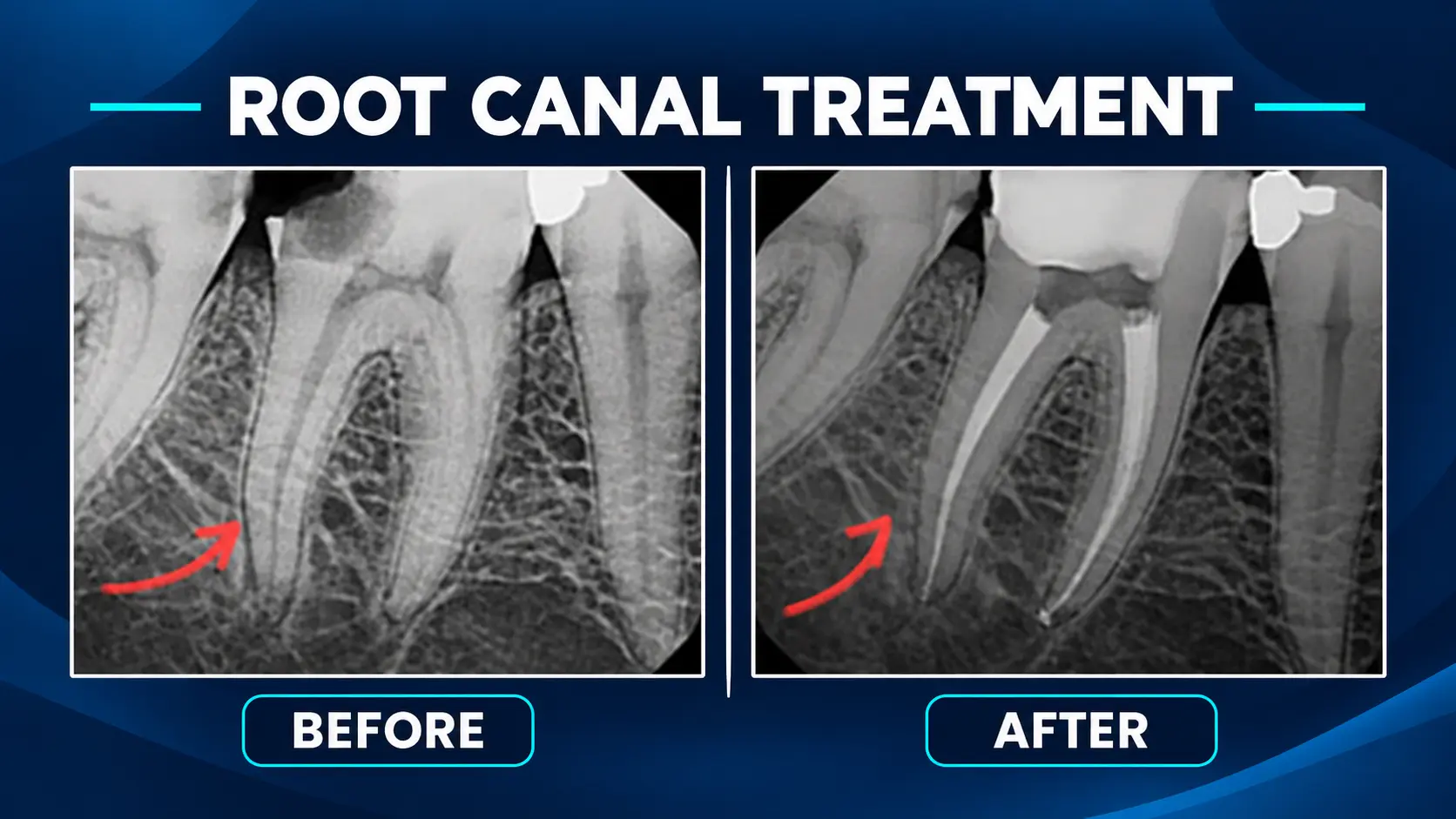
The before-and-after dental X-rays show the tooth prior to treatment and the completed root canal filling after the internal canal system had been carefully treated.
The Condition Before Root Canal Treatment
The initial dental X-ray allowed the dentist to examine the tooth, its roots and the surrounding structures before developing an appropriate treatment plan.
Following a clinical assessment, root canal treatment was recommended as a suitable option to manage the problem inside the tooth and avoid removing it where possible.
Symptoms that can sometimes indicate the need for root canal treatment include persistent toothache, prolonged sensitivity, tenderness when biting and swelling around the affected tooth. However, only a dental examination and the appropriate X-rays can confirm whether treatment is required.
Planning the Treatment
Before beginning the procedure, the dentist assessed the tooth and reviewed the dental X-ray to understand the shape and position of its root canals.
The patient was then informed about the treatment process, the expected outcome and any additional restoration that might be required to protect the tooth after the root canal procedure.
Each case is different, so the number of appointments and treatment stages depends on the condition of the tooth and the complexity of its internal canal system.
The Root Canal Treatment Process
During the procedure, the tooth was carefully accessed so the internal canals could be treated.
The treatment involved:
Isolating and preparing the affected tooth.
Accessing the internal pulp chamber.
Cleaning and shaping the root canals.
Disinfecting the internal canal system.
Filling and sealing the prepared canals.
Taking a follow-up X-ray to assess the completed treatment.
Planning the appropriate final restoration for the tooth.
Root canal treatment is designed to remove damaged or infected tissue from inside the tooth before the canals are sealed to reduce the risk of further infection. Expert Endodontic Care Freedom Dental
Root Canal Treatment Before and After Results
The after-treatment X-ray shows the completed root canal filling within the treated tooth. The internal canals have been filled and sealed as part of the process of preserving the natural tooth.
The aim of the procedure was not simply to address the internal dental problem, but also to retain the patient’s tooth and allow it to continue functioning.
The patient was provided with aftercare advice and informed about the importance of follow-up appointments. Depending on the remaining tooth structure, a dental filling, inlay, onlay or crown may be recommended to provide additional protection.
Why Saving the Natural Tooth Matters
Whenever clinically appropriate, preserving a natural tooth can help maintain normal chewing function and avoid the space that would otherwise be created by an extraction.
A successfully treated tooth still requires regular dental care. Brushing, interdental cleaning, routine examinations and any recommended protective restoration remain important after root canal treatment.
Do All Root Canal Treatments Look the Same?
No. The number, shape and position of root canals can vary between teeth and patients. Some teeth have relatively straightforward canal systems, while others require more complex treatment.
The final result also depends on factors including:
The condition of the tooth before treatment.
The number and shape of the root canals.
The extent of the internal damage or infection.
The amount of healthy tooth structure remaining.
The final restoration placed after treatment.
The patient’s oral hygiene and ongoing dental care.
A dental examination is therefore necessary to determine whether root canal treatment is appropriate for an individual tooth.
Root Canal Treatment at Freedom Dental Dublin
Freedom Dental provides root canal assessment and treatment for teeth affected by decay, disease or injury. The dental team uses clinical examinations and dental X-rays to create an individual treatment plan for each patient.
Learn more about Root Canal Treatment at Freedom Dental.
Book a Root Canal Consultation
If you have persistent tooth pain, sensitivity, swelling or discomfort when biting, arrange a dental assessment rather than waiting for the problem to become more severe.
Book an appointment at Freedom Dental or call:
01 872 95 69
085 830 0289