


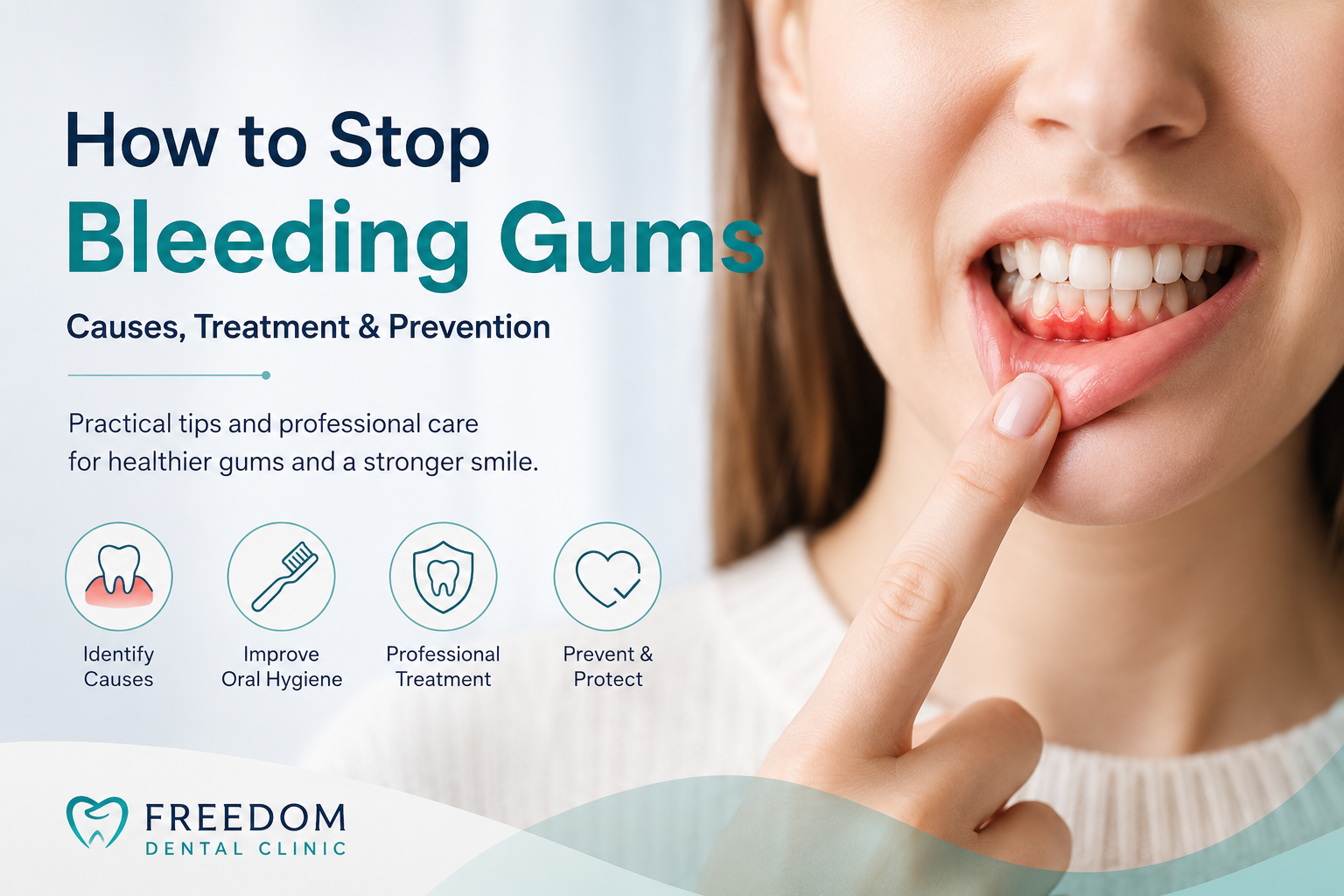
How to Stop Bleeding Gums and Improve Your Oral Health
If you have noticed blood while brushing or flossing, you may be asking yourself: why are my gums bleeding? Bleeding gums are a common oral health concern and can happen for several reasons, from brushing too aggressively to early signs of gum disease.
Many people assume occasional bleeding is normal, but healthy gums generally should not bleed during daily oral care. Understanding the cause and taking the right steps early can help protect your oral health and prevent more serious dental issues.
If gum irritation is linked to plaque accumulation, routineProfessional Dental Cleaningcan help maintain healthier gums and support long-term oral health.
What Causes Bleeding Gums and Is It Normal for Gums to Bleed?
Occasional gum irritation can happen, but repeated bleeding should not be ignored.
Common causes include:
Plaque buildup along the gum line
Gingivitis (early gum disease)
Brushing too hard
Starting flossing after a long break
Hormonal changes
Vitamin deficiencies
Poor oral hygiene habits
Smoking or tobacco use
Many people experience gums bleed when brushing teeth because inflamed gum tissue becomes sensitive and more likely to bleed.
In some cases, untreated decay or infection may also contribute to gum irritation and could require treatments such as Composite Filling or Root Canal Treatment depending on the condition.
The Importance of Proper Brushing and Flossing
Good daily habits play a major role in preventing bleeding gums.
To support healthier gums:
Use a soft-bristled toothbrush
Brush gently for two minutes twice daily
Hold the brush at a slight angle toward the gum line
Floss carefully once per day
Replace your toothbrush regularly
People sometimes stop flossing because of bleeding, but consistent gentle flossing can often improve gum health over time.
Patients undergoing alignment treatments such as Dental Braces should pay extra attention to cleaning around brackets to reduce gum inflammation.
Foods and Vitamins That Support Healthy Gums
Your diet can influence gum health more than many people realise.
Consider adding:
Vitamin C rich foods such as oranges, strawberries, and peppers
Leafy green vegetables
Foods rich in Vitamin K
Dairy products for calcium support
Water to help maintain oral hydration
Balanced nutrition supports stronger gum tissue and overall oral health.
For patients considering cosmetic smile improvements like Dental Veneers or Teeth Whitening, healthy gums create a better foundation for long-term aesthetic results.
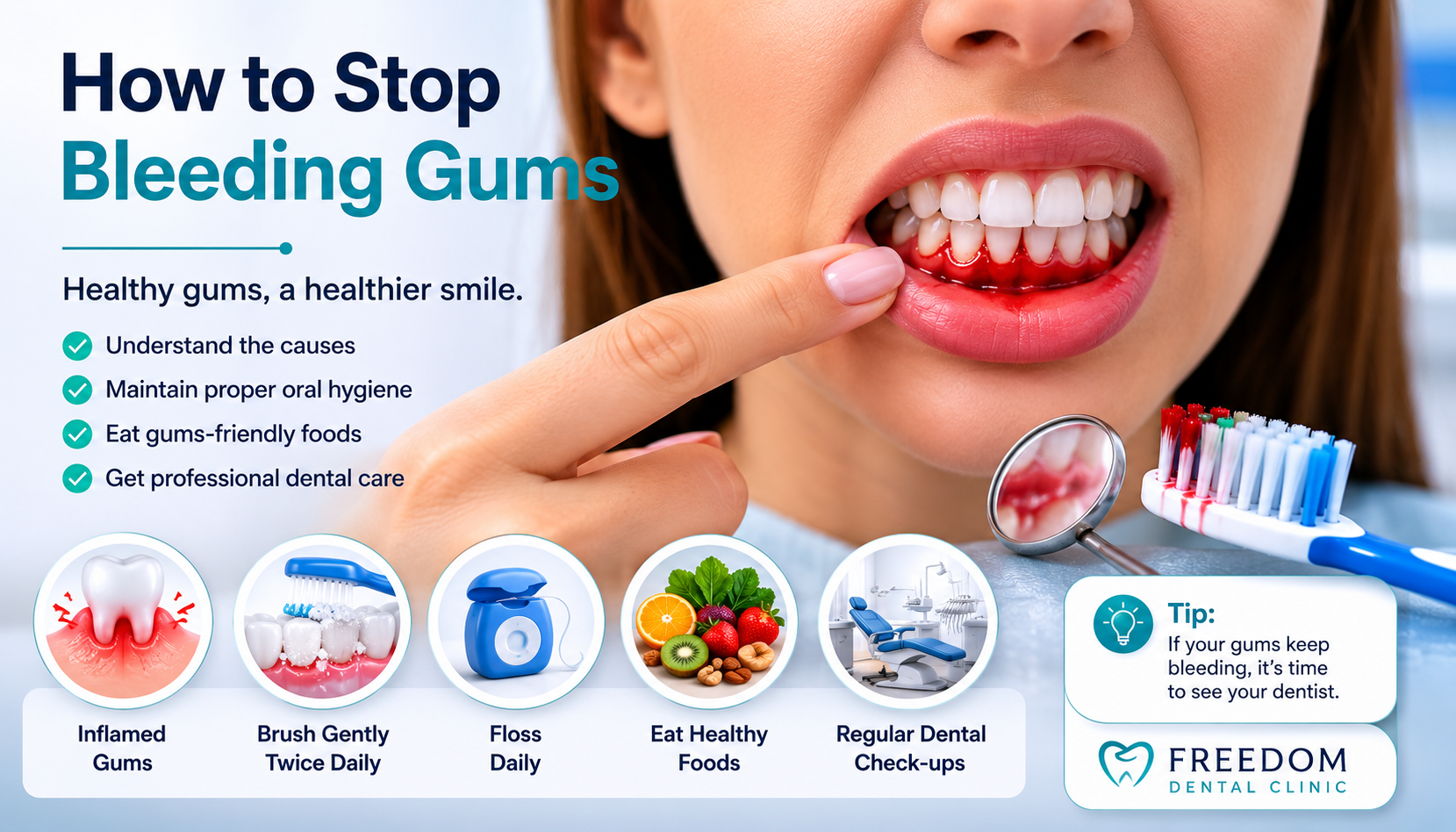
When to See a Freedom Dental Clinic for Bleeding Gums?
Occasional minor irritation may improve, but schedule a dental visit if:
Bleeding continues for more than a week
Gums appear swollen or red
You notice persistent bad breath
Teeth feel loose
Pain or sensitivity develops
Early diagnosis allows treatment before symptoms become more advanced.
If gum damage affects tooth stability, restorative options including Dental Crowns and Bridges or Dental Implanttreatment may be discussed where appropriate.
Professional Treatments for Bleeding Gums
Professional treatment depends on the underlying cause.
Your dentist may recommend:
Professional Dental Cleaning to remove plaque and tartar
Deep cleaning procedures when needed
Personalised oral hygiene guidance
Assessment for gum disease
Restorative treatment if other dental issues are involved
Where tooth structure is weakened, solutions such as Inlays and Onlays may help preserve the natural tooth.
If a severely damaged tooth cannot be saved, Tooth Extraction may occasionally be necessary.
How to Prevent Bleeding Gums in the Future?
Prevention starts with consistent habits.
Follow these simple steps:
Brush twice daily
Floss regularly
Attend routine dental check-ups
Maintain a balanced diet
Avoid smoking
Schedule professional cleaning appointments
Preventive care helps reduce future dental treatment needs and supports healthier gums.
Conclusion
Learning how to stop bleeding gums starts with identifying the cause and improving daily oral hygiene habits. While occasional irritation may happen, persistent bleeding should not be ignored.
Healthy gums should feel comfortable and not bleed during brushing or flossing. Professional assessment and preventive care can support healthier teeth and gums for the future.
FAQs
Why do my gums bleed when I brush my teeth?
Bleeding while brushing is commonly linked to plaque buildup, gum inflammation, brushing too hard, or inconsistent oral hygiene.
Is bleeding gums a sign of gum disease?
It can be. Bleeding gums are often an early symptom of gingivitis, which may progress if untreated.
Can bleeding gums heal on their own?
Mild irritation may improve with better oral hygiene, but ongoing bleeding should be evaluated by a dental professional.
Should I floss if my gums bleed?
Yes. Gentle and consistent flossing often helps reduce inflammation over time.
When should I see a dentist for bleeding gums?
If bleeding continues for several days, becomes frequent, or is accompanied by swelling or pain, schedule a dental examination.