


Invisalign Dublin: Costs, Treatment Time and What to Expect
If you want straighter teeth but do not want traditional metal braces, Invisalign may be a discreet alternative worth considering. Invisalign uses a series of clear, custom-made aligners to gradually move the teeth into a more even position.
The aligners are removable, designed to fit into your daily routine and can be less noticeable than traditional braces. However, the right treatment depends on your teeth, bite, goals and overall oral health.
This guide explains how Invisalign works, what treatment may cost in Dublin, how long it can take and what you should know before booking a consultation.
What Is Invisalign?
Invisalign is an orthodontic treatment that uses a series of clear aligners rather than metal brackets and wires. Each aligner is designed to apply gentle pressure to specific teeth. As you move through the series, your teeth gradually shift according to your personalised treatment plan.
Invisalign may be used to address concerns such as:
Crowded teeth
Gaps between teeth
Mild to moderate alignment issues
Selected bite problems
Teeth that have moved after previous orthodontic treatment
Invisalign is not suitable for every case. A dentist must assess your teeth and bite before confirming whether clear aligners are an appropriate option.
The Invisalign Process Step by Step
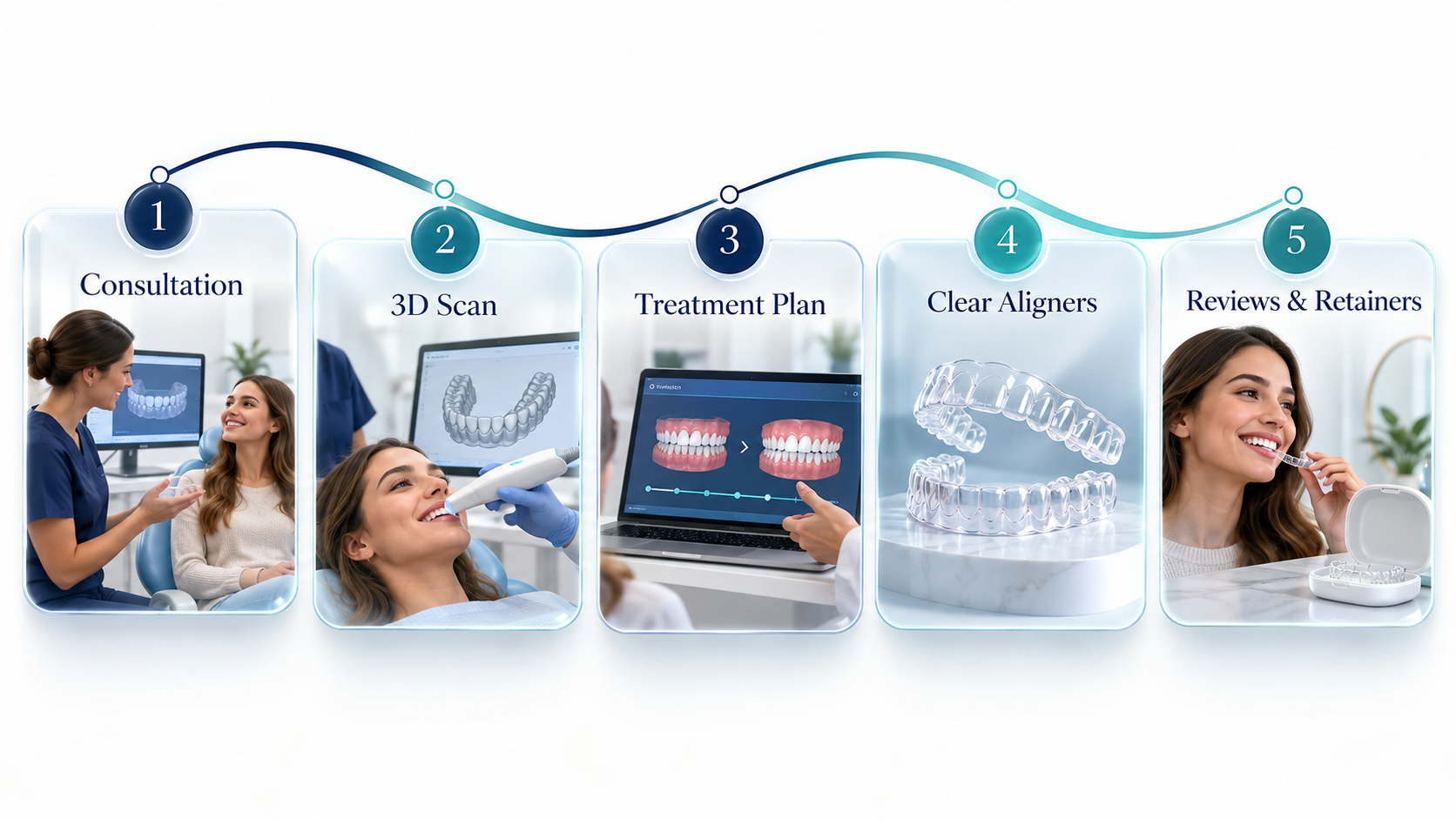
1. Initial Consultation
Your treatment begins with a consultation. Your dentist will discuss your concerns, examine your teeth and assess your bite.
This is also the right time to ask about expected results, treatment time, costs and whether Invisalign is suitable for your specific case.
2. Digital Scanning and Treatment Planning
Freedom Dental’s Invisalign process includes digital scanning of the teeth. A 3D scan can help create a detailed view of your current alignment and support the development of a personalised treatment plan.
Your dentist will explain the proposed movements and the expected stages of treatment before you decide whether to proceed.
3. Custom Aligners
Once the treatment plan is approved, a series of custom-made clear aligners is prepared. Each aligner is worn for a specific period before moving to the next stage.
The aligners should be worn as instructed. Removing them too often or not wearing them for enough hours may affect the progress of treatment.
4. Progress Appointments
Regular check-ups allow your dentist to monitor the movement of your teeth and make sure your treatment is progressing as planned.
The number and frequency of appointments will depend on your individual treatment plan.
5. Retainers After Treatment
When your active Invisalign treatment is finished, you will usually need retainers to help maintain the new position of your teeth.
Teeth can naturally move over time, even after orthodontic treatment. Wearing retainers as advised is an important part of protecting your results.
How Much Does Invisalign Cost in Dublin?
The cost of Invisalign in Dublin varies from one patient to another. It may depend on:
The complexity of your alignment or bite concerns
The number of aligners required
The expected treatment length
Whether additional dental treatment is needed
The type of follow-up and retention plan required
Freedom Dental currently offers Invisalign with pricing available following consultation. This allows the dentist to assess your teeth and provide information based on your actual treatment needs rather than giving an inaccurate general price.
You can visit the Invisalign treatment page or book an appointment online.
How Long Does Invisalign Take?
Treatment time varies depending on the complexity of the case and how consistently the aligners are worn.
Some mild alignment concerns may take less time, while more complex movement or bite correction may require a longer treatment plan. Your dentist can provide a more personalised estimate after examining your teeth and completing the required scans.
Wearing the aligners for the recommended number of hours each day is important. If they are regularly removed for long periods, treatment may take longer than originally expected.
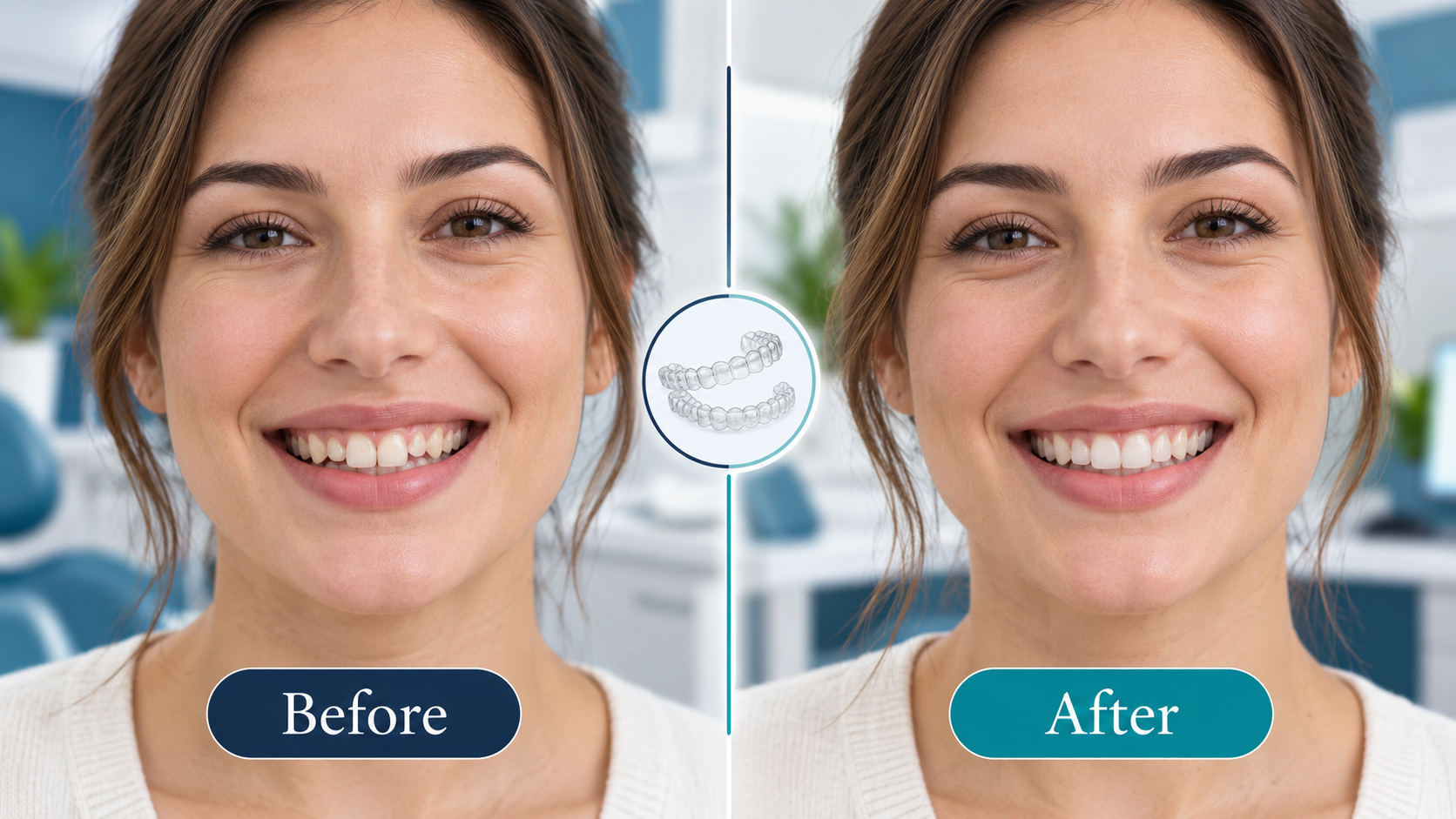
Invisalign Before and After
Invisalign before-and-after results can vary considerably between patients. The outcome depends on:
Your starting tooth position
The severity of crowding or spacing
Your bite
The number of aligners required
How consistently you wear the aligners
Whether you wear retainers after treatment
The aim is not simply to make the teeth appear straighter. A properly planned treatment should also consider how the teeth meet, how they function and how the final result fits your facial appearance.
Your dentist should explain what Invisalign may realistically achieve in your case rather than promising identical results to another patient.
Invisalign Braces Compared with Traditional Braces
Both Invisalign and traditional braces can be used to improve tooth alignment, but they work differently.
Invisalign
Clear and less noticeable
Removable for eating and brushing
No metal brackets or wires
Requires consistent daily wear
May not be suitable for every orthodontic case
Traditional Braces
Use brackets and wires
Remain fixed throughout treatment
Can treat a wider range of alignment concerns
Require careful cleaning around the brackets
May be preferred for more complex cases
You can compare clear aligners with other orthodontic options through our Dental Braces service.
What Does Freedom Dental Offer for Invisalign in Ireland?
Freedom Dental provides a structured Invisalign treatment process that may include:
An initial consultation
Digital scanning of your teeth
A personalised treatment plan
Custom-made clear aligners
Progress check-ups
Guidance about retainers after treatment
The clinic also offers flexible payment options and modern dental technology. Your dentist will explain the treatment stages, expected costs and what is included before you begin.
Because every smile is different, the final treatment plan is created around your dental needs rather than a standard package.
Is Invisalign Comfortable?
You may feel pressure or mild tightness when wearing a new aligner. This is often a sign that the aligner is applying pressure as planned.
Some patients may experience temporary tenderness when changing to a new set. If an aligner feels unusually sharp, painful or does not fit correctly, contact your dental team for advice.
Looking After Your Teeth During Invisalign
Good oral hygiene remains important throughout Invisalign treatment. You should:
Brush your teeth regularly
Clean between your teeth
Remove aligners before eating
Clean your aligners as instructed
Avoid drinking sugary drinks while wearing them
Attend your progress appointments
A professional cleaning may also be recommended if plaque or tartar has built up. You can learn more about Professional Dental Cleaning.
What Happens If You Stop Wearing Invisalign?
If you stop wearing your aligners before treatment is complete, your teeth may not reach the planned positions. In some cases, teeth can begin moving back towards their previous positions.
If you are struggling to wear your aligners or have lost one, contact your dentist rather than stopping treatment without advice.
Book an Invisalign Consultation in Dublin
If you are considering clear aligners, a consultation is the best way to understand whether Invisalign is suitable for you.
Freedom Dental can assess your teeth, discuss your goals and explain the likely treatment process and cost.
Call 085 830 0289 or 01 872 95 69, or book an appointment online.
Conclusion
Invisalign can be a discreet and flexible way to improve the alignment of your teeth. It may be suitable for people with certain spacing, crowding and bite concerns, but treatment time and results vary from patient to patient.
The cost of Invisalign in Dublin depends on the complexity of your case and the treatment plan required. A professional assessment, digital scan and personalised consultation can give you a clearer understanding of your options.