

Teeth Whitening Products Available in Ireland
The packaging may promise a brighter smile in only a few days, but these products do not all work in the same way. Some mainly remove surface stains, while others contain bleaching ingredients that can change the colour of natural teeth.
The strength, safety and expected result also vary considerably. Before choosing a product, it is important to understand what it contains, where it came from and whether your teeth and gums are healthy enough for whitening.
What Are Teeth Whitening Products?
Teeth whitening products are designed either to remove stains from the surface of the teeth or lighten the natural tooth colour.
They can generally be divided into two categories:
Products that remove external stains through cleaning or polishing.
Products containing bleaching ingredients that change the colour of natural teeth.
Whitening toothpaste, for example, mainly targets surface stains caused by coffee, tea, red wine or smoking. A peroxide-based gel works differently by bleaching pigments within the tooth structure.
This distinction matters because a product advertised as “whitening” may improve surface staining without producing a significant change in the natural shade of your teeth.
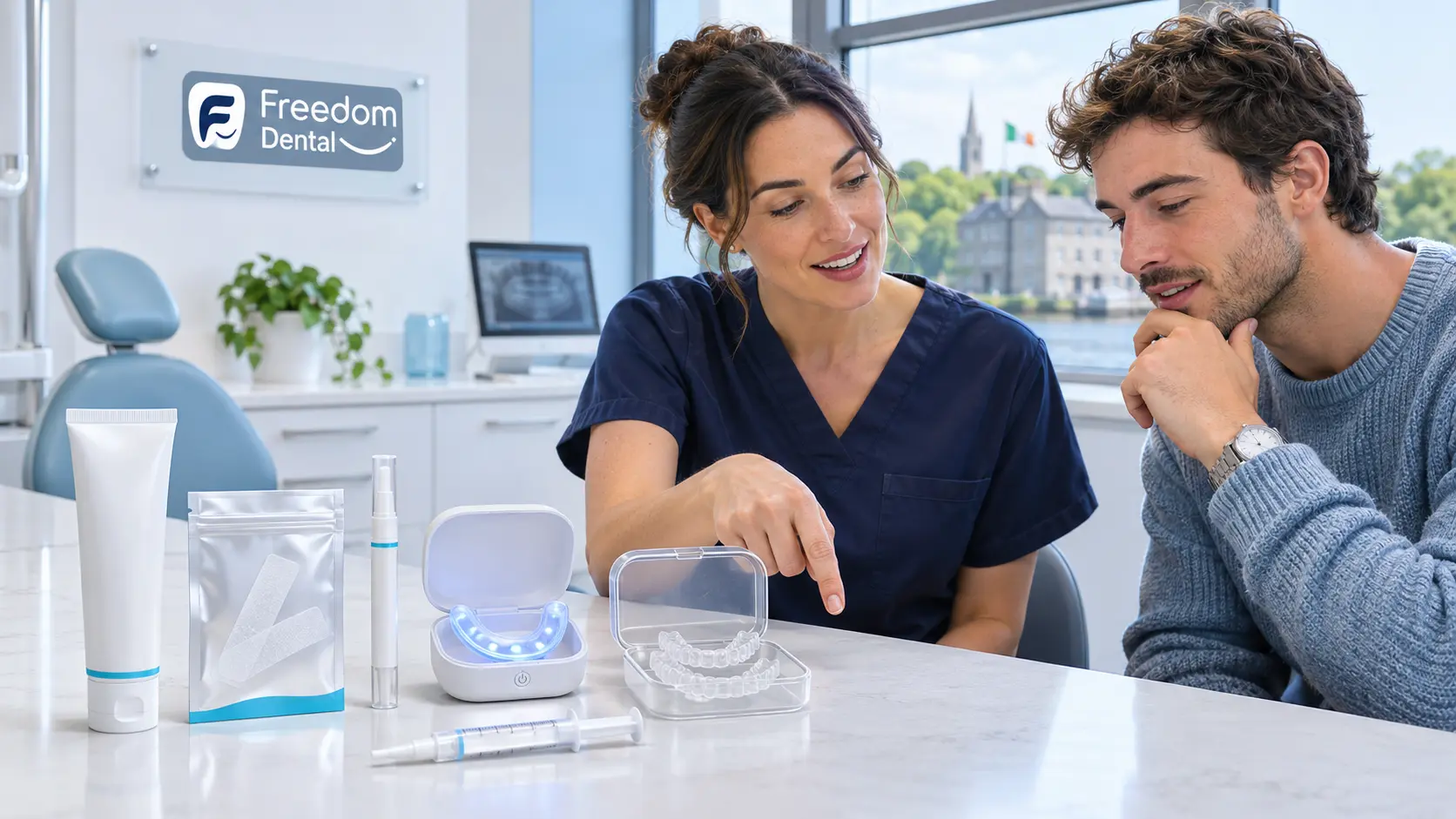
Common Types of Teeth Whitening Products
Whitening Toothpaste
Whitening toothpaste is one of the most accessible options and can usually be found in supermarkets and pharmacies.
It may contain polishing ingredients that help remove surface staining from food, drinks or tobacco. It can be useful for maintaining a clean appearance, but it will not normally deliver the same result as professional bleaching.
Overusing highly abrasive toothpaste may contribute to wear, particularly if you brush aggressively or already have exposed dentine. Ask your dentist for advice if you have sensitive teeth, gum recession or enamel wear.
Whitening Strips
Whitening strips are thin flexible strips coated with whitening gel. They are applied directly to the front surfaces of the teeth for a set period.
Results can vary because:
The strips may not fit every tooth evenly.
Saliva can affect how well they remain in place.
The gel may contact the gums.
Crowded or rotated teeth may receive uneven coverage.
The active ingredient and concentration vary between products.
Be cautious when buying whitening strips through social media advertisements or unknown international sellers. Products supplied outside regulated Irish and EU channels may not comply with local safety requirements.
Whitening Gels and Pens
Whitening pens allow gel to be applied directly to the teeth. They are often marketed for quick applications or minor touch-ups.
A pen may be convenient, but applying an even amount across every visible tooth can be difficult. Saliva can also dilute or move the gel before it has had enough contact time.
Check the ingredient list and instructions carefully. Do not assume a product is safe simply because it is described as “natural”, “professional strength” or “dentist approved”.
LED Teeth Whitening Kits
LED kits usually include a mouth tray, whitening gel and a small light device. The light is promoted as a way to accelerate or activate the whitening process.
However, the result depends heavily on the gel’s active ingredients and how they are used. The presence of an LED light does not automatically make a product more effective or safer.
Poorly fitting trays can allow gel to contact the gums, while products bought from unverified sellers may contain ingredients or concentrations that are not clearly disclosed.
Whitening Trays
Whitening trays hold a gel against the teeth for a specified period. They may be sold as universal trays or provided through a dental clinic as custom-made trays.
Generic trays may fit poorly, causing:
Uneven gel coverage.
Leakage onto the gums.
Discomfort while wearing the tray.
Irregular whitening results.
Custom trays are created to fit the individual patient’s teeth. This provides better control over gel placement and can reduce unnecessary contact with the gums.
Dentist-supervised whitening also allows the treatment schedule to be adjusted if sensitivity develops.
Charcoal Whitening Products
Charcoal toothpaste and powders are often promoted as natural whitening products. They may remove some surface stains through abrasion, but this does not mean they bleach the natural tooth colour.
Frequent use of abrasive powders may contribute to surface wear. Once enamel has been lost, it cannot simply grow back, and the darker dentine underneath may become more visible.
Charcoal products can also collect around fillings, gum margins and areas that are difficult to clean.
Whitening Mouthwash
Whitening mouthwash is normally intended to support daily oral care and may help reduce the development of some surface stains.
Because the liquid remains in contact with the teeth for a limited time, it is unlikely to deliver the same level of colour change as a professionally planned whitening treatment.
Mouthwash should support brushing and interdental cleaning rather than replace them.
Are Teeth Whitening Products Legal in Ireland?
Hydrogen peroxide is a common active bleaching ingredient, but its use is regulated in Ireland and throughout the EU.
The current rules include:
Products containing or releasing no more than 0.1% hydrogen peroxide may be sold directly to consumers.
Products containing or releasing more than 0.1% and up to 6% hydrogen peroxide can only be supplied by a dentist, with the first use completed by or under the supervision of a dental practitioner.
Cosmetic whitening products containing or releasing more than 6% hydrogen peroxide are prohibited under EU cosmetic regulations.
Products containing more than 0.1% hydrogen peroxide must not be used on anyone under 18. hpra.ie
These restrictions also apply to ingredients that release hydrogen peroxide, including carbamide peroxide.
Why You Should Be Careful When Buying Online
The Health Products Regulatory Authority warned Irish consumers in June 2026 about illegal whitening products entering the market through online sales.
The HPRA reported that it detained 6,849 units during 2025 and was involved in removing 105 website URLs linked to non-compliant products. Some products tested contained hydrogen peroxide concentrations far above EU limits. hpra.ie
When considering an online whitening product, check for:
A clear list of ingredients.
Usage and safety instructions.
The peroxide concentration where applicable.
The name and address of the responsible person within the EU or EEA.
Age restrictions and relevant warnings.
A reputable Irish or EU supplier.
The HPRA advises against using products that do not display an EU or EEA responsible person and address, as they may not meet EU safety requirements. hpra.ie
Avoid products that promise extreme results, use unclear ingredient descriptions or are supplied through unofficial sellers with no traceable business information.
Possible Side Effects of Whitening Products
Tooth sensitivity is one of the most common side effects of whitening. Some people experience mild temporary sensitivity, while others may find the discomfort more noticeable.
Potential problems include:
Sensitivity to cold drinks or air.
Gum irritation.
Inflammation or pain.
Chemical burns from excessive peroxide.
Uneven whitening.
Irritation caused by leaking trays.
Damage or changes around existing restorations.
Stop using the product and contact a dentist if you experience severe pain, persistent sensitivity, swollen gums, white patches on the gums or signs of a chemical burn.
Who Should Speak to a Dentist Before Whitening?
A dental assessment is advisable for everyone considering bleaching products, but it is particularly important if you have:
Tooth decay.
Cracked or broken teeth.
Gum disease.
Receding gums.
Exposed tooth roots.
Persistent tooth sensitivity.
Crowns, veneers or composite bonding.
Large visible fillings.
A history of dental trauma.
A single tooth that has become darker.
Whitening may temporarily mask a concern without treating its underlying cause. For example, one dark tooth may result from previous trauma or changes inside the tooth and should be assessed before any cosmetic treatment begins.
Do Whitening Products Work on Crowns and Fillings?
Whitening products change the colour of natural tooth structure. They do not lighten:
Dental crowns.
Veneers.
Composite bonding.
White fillings.
Bridges.
Dental implants.
Dentures.
If your restorations currently match your teeth, whitening the surrounding natural teeth may create a visible colour difference.
Your dentist can assess the location and shade of existing restorations and explain whether they may need to be replaced after whitening. Replacement is not required in every case, but it should be considered before starting treatment.
Which Teeth Whitening Product Is Best?
There is no single product that is best for every patient.
The right choice depends on:
The cause of the discolouration.
Whether the staining is internal or external.
Your current tooth shade.
Tooth sensitivity.
Gum health.
Existing restorations.
How quickly you want a result.
Whether you can follow the treatment instructions consistently.
Whitening toothpaste may be enough for minor surface staining. More noticeable discolouration may require a professionally planned whitening system.
Our guide to the best way to whiten teeth safely in Dublin explains how the main options compare.
Store-Bought Products vs Professional Whitening
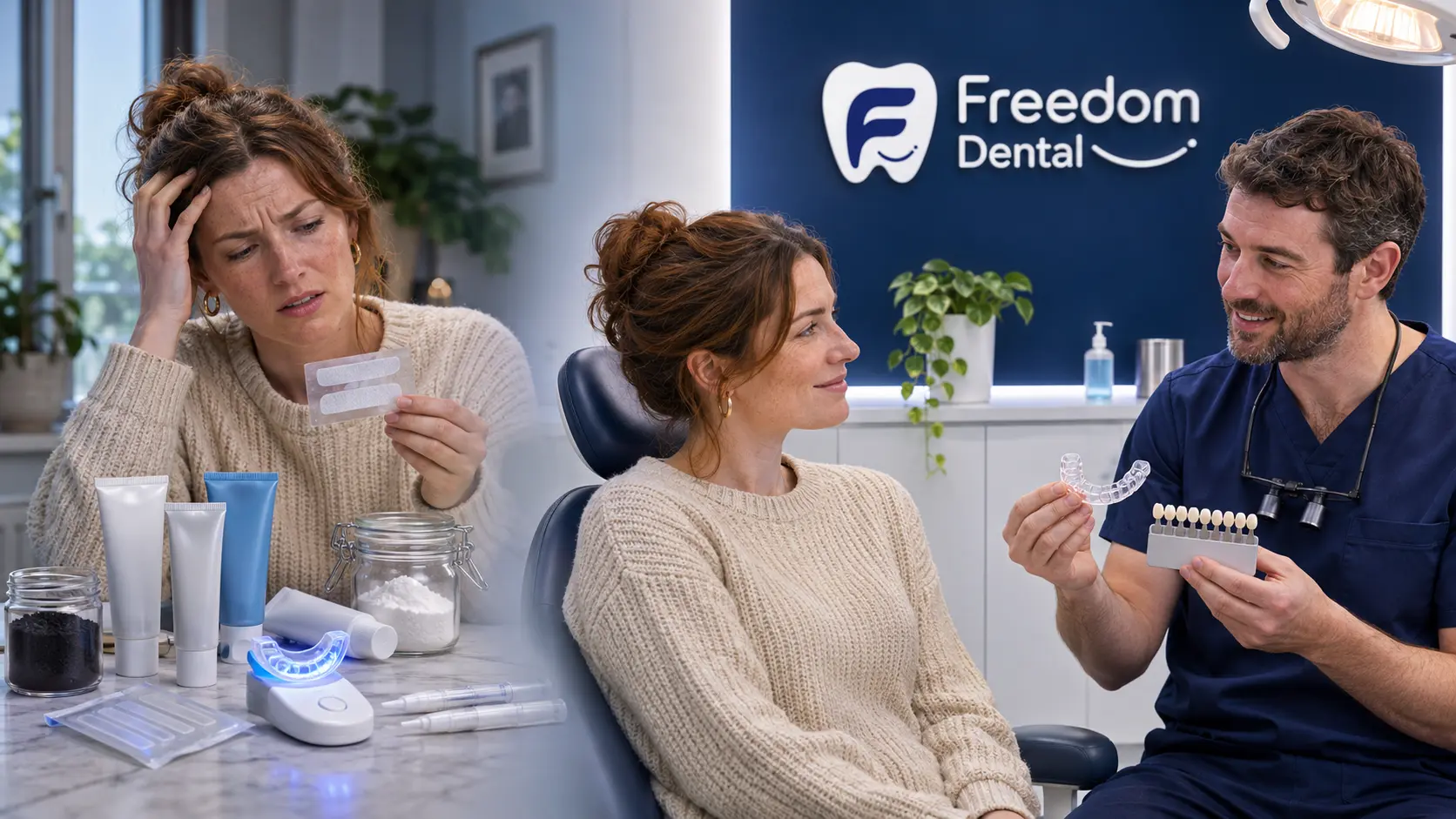
Store-bought products may appear cheaper and more convenient, but they provide limited personalisation. A product cannot assess whether you have decay, leaking restorations, gum inflammation or exposed roots.
Professional whitening begins with an examination of your teeth and gums. Your dentist can then:
Identify whether whitening is suitable.
Explain which teeth are likely to respond.
Check visible restorations.
Select an appropriate treatment approach.
Provide instructions based on your needs.
Help manage sensitivity.
Monitor your progress.
You can learn more about professional teeth whitening at Freedom Dental.
How Long Do Whitening Results Last?
Whitening results are not permanent. Teeth can gradually become stained again through daily habits and natural changes.
The result may fade more quickly if you regularly consume:
Coffee.
Tea.
Red wine.
Dark sauces.
Highly pigmented foods.
Tobacco products.
Good brushing, interdental cleaning and regular dental appointments can help maintain the appearance of your teeth.
Do not repeatedly use whitening products without following the recommended schedule. Excessive use will not necessarily produce a better result and may increase sensitivity or irritation.
What Results Can You Expect?
The outcome depends on your original tooth colour and the type of staining present. Yellow or food-related staining may respond differently from grey discolouration, fluorosis or staining linked to previous dental trauma.
Whitening should create a natural-looking improvement rather than an artificial opaque white colour.
You can view a real example in our teeth whitening before-and-after case study. Results vary, so the case study should be viewed as an example rather than a guaranteed outcome.
Choosing Teeth Whitening Products Safely
Before using any teeth whitening product:
Check that the supplier is reputable.
Read the complete ingredient list.
Look for an EU or EEA responsible person and address.
Follow the stated application time.
Never apply more gel than instructed.
Do not use the treatment more frequently than recommended.
Stop if you experience significant pain or irritation.
Ask a dentist if you have existing dental work or oral health concerns.
If you are comparing cost as well as safety, read our guide explaining how much teeth whitening costs in Ireland.
Professional Teeth Whitening in Dublin
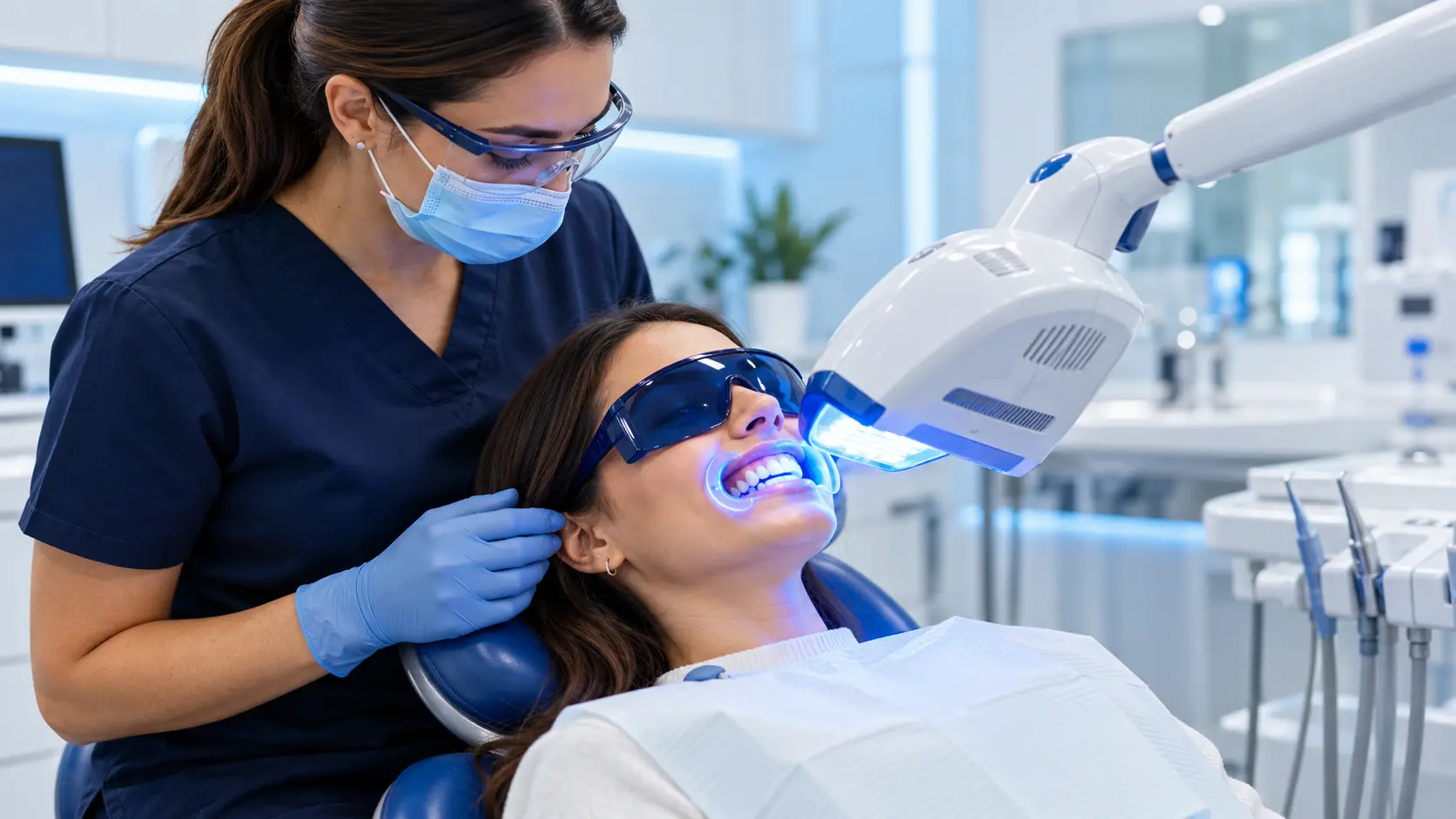
Freedom Dental provides professional teeth whitening following an assessment of your teeth, gums and existing dental work.
The appointment allows the dental team to determine whether whitening is appropriate and explain the result that may realistically be achieved.
If you are unsure which whitening product is right for you, book a consultation with Freedom Dental for personalised advice.