

Composite Bonding: Transform Your Smile Naturally
One of the main reasons patients consider composite bonding is that it can often provide noticeable cosmetic improvements while preserving most of the natural tooth structure. At Freedom Dental Clinic in Dublin, the treatment uses tooth-coloured composite resin that is carefully shaped and polished to complement your natural smile.
But is composite bonding right for everyone? And what should you know before choosing it?
What Is Composite Bonding?
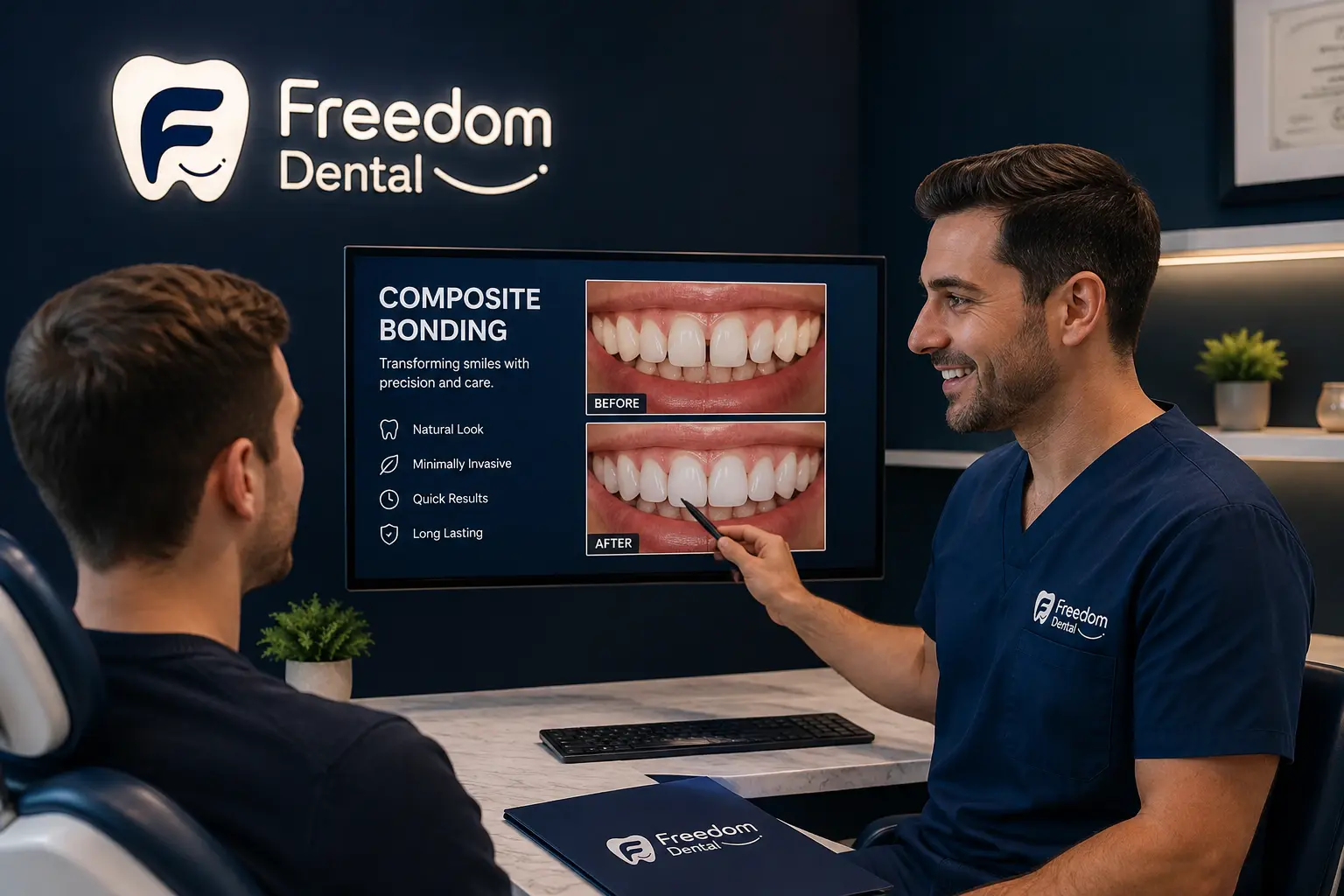
Composite bonding is a cosmetic dental treatment that uses a tooth-coloured resin material to improve the appearance of natural teeth.
During the procedure, the composite material is applied directly to the tooth and carefully shaped by the dentist. It is then hardened using a curing light before being polished to create a natural-looking finish.
Unlike some other cosmetic treatments, composite bonding usually requires little or no removal of healthy enamel. This makes it a conservative option for patients who want to improve their smile while maintaining their natural teeth.
The treatment can be used to address several common cosmetic concerns, including:
Chipped teeth
Uneven or worn edges
Small gaps between teeth
Minor changes in tooth shape
Mild discoloration
Slightly uneven teeth
The exact result depends on your existing teeth, bite, oral health and the changes you want to make.
How Does Composite Bonding Work?
One of the biggest advantages of composite bonding is the relatively straightforward treatment process.
Your dentist will first assess your teeth and discuss the improvements you would like to make. This consultation is important because cosmetic dentistry should be planned around your natural smile rather than simply applying the same treatment to every patient.
Once your treatment plan has been agreed, the tooth is prepared so that the composite material can bond properly. The resin is then applied and sculpted into the desired shape.
The dentist carefully considers the size, shape and proportions of the tooth so that the finished result fits naturally with the surrounding teeth.
Finally, the composite is hardened with a special curing light and polished.
For many patients, the treatment can be completed in a single appointment.
What Can Composite Bonding Fix?
Composite bonding is particularly useful for minor cosmetic imperfections.
Chipped Teeth
Small chips can make teeth appear uneven or affect the overall appearance of your smile. Composite resin can be shaped to rebuild the missing section and restore a smoother edge.
Small Gaps
If you have small spaces between your teeth, composite bonding may be used to close or reduce them without orthodontic treatment in suitable cases.
Uneven Tooth Shape
Teeth that look too short, narrow or uneven can sometimes be reshaped using composite resin to create better proportions.
Discolouration
Composite bonding can sometimes be used to cover areas of discoloration that do not respond well to conventional whitening.
However, the dentist should first determine the cause of the discoloration and whether bonding is the most appropriate option.
Worn Teeth
Minor wear affecting the edges of teeth may also be improved with composite bonding, depending on the cause and severity of the wear.
Is Composite Bonding Suitable for Everyone?
Composite bonding can be an excellent option, but it isn't automatically the best treatment for every patient.
Your teeth and gums should be assessed before cosmetic treatment. Active decay, significant gum disease, extensive structural damage or major bite problems may need to be addressed first.
For example, if a tooth has a cavity or requires restoration rather than a cosmetic enhancement, a composite filling may be more appropriate.
You can learn more about the difference between restorative treatment and cosmetic bonding through Freedom Dental's Composite Filling treatment.
Similarly, patients with significant tooth alignment problems may need orthodontic treatment before considering cosmetic bonding.
A consultation allows your dentist to determine whether bonding can safely achieve the result you're looking for.
Composite Bonding vs Veneers: Which Is Better?
Composite bonding and veneers can both improve the appearance of your smile, but they work in different ways.
Composite bonding uses resin that is applied directly to the tooth, while veneers are thin shells designed to cover the front surface of the teeth.
Composite bonding is generally considered a more conservative option because it usually requires minimal tooth preparation. It can also often be completed more quickly.
Veneers may be more suitable for patients looking for a more extensive smile transformation or specific long-term cosmetic characteristics.
There isn't one treatment that is automatically better for everyone. Your choice should depend on your teeth, cosmetic goals, desired outcome and long-term expectations.
If you're trying to decide between the two, our guide Veneers vs Composite Bonding in Dublin explains the key differences in more detail.
How Long Does Composite Bonding Take?
One of the reasons composite bonding is attractive to patients is the relatively short treatment process.
Depending on how many teeth are being treated and the complexity of the case, bonding can often be completed during a single visit.
The dentist needs enough time to carefully sculpt, shape and polish the composite material rather than simply applying it to the tooth.
The goal is not only to make the teeth look different, but to make the result look natural.
This is particularly important when bonding is performed on visible front teeth, where small differences in shape and proportion can affect the appearance of the entire smile.
Does Composite Bonding Look Natural?
Yes, when properly planned and performed, composite bonding can be designed to look very natural.
The resin is tooth-coloured and can be selected and shaped to blend with the surrounding teeth.
The final appearance depends on several factors, including the quality of the material, colour matching, tooth preparation, shaping and polishing.
At Freedom Dental Clinic, the approach is focused on creating natural-looking cosmetic improvements rather than changing the character of the entire smile.
If you'd like to see more about how the treatment can change the appearance of the smile, you can read How Composite Bonding Can Transform Your Smile.
What Are the Benefits of Composite Bonding?
There are several reasons why composite bonding has become a popular cosmetic treatment.
Minimal Tooth Preparation
Unlike treatments that require more extensive preparation, composite bonding generally preserves most of the natural tooth structure.
Quick Cosmetic Improvement
Many suitable cases can be completed in one appointment, allowing patients to see the cosmetic improvement relatively quickly.
Natural Appearance
The material can be shaped and colour matched to create a result that blends with your existing teeth.
Versatile Treatment
Bonding can address several small cosmetic concerns at the same time, including chips, gaps and uneven edges.
Conservative Option
For patients who want to improve their smile without extensive dental treatment, composite bonding can be a less invasive option.
How Do You Look After Composite Bonding?
Good oral hygiene is important for maintaining both your natural teeth and your bonded teeth.
Continue brushing twice a day with a fluoride toothpaste and clean between your teeth regularly. Routine dental examinations are also important so your dentist can monitor the condition of the bonding and your overall oral health.
It's also sensible to avoid using your teeth to bite very hard objects or open packaging, as excessive force can damage both natural teeth and composite material.
Composite can also be affected by staining over time, particularly with frequent exposure to strongly coloured foods and drinks.
Your dentist can give you personalised advice based on the location and amount of bonding you have.
Can Composite Bonding Be Repaired?
One advantage of composite bonding is that minor damage can sometimes be repaired without replacing the entire restoration.
If a bonded tooth chips or the material becomes damaged, your dentist can assess the area and determine whether repair or replacement is appropriate.
However, the best approach depends on the condition of the bonding and the underlying tooth.
This is another reason why regular dental check-ups are important after cosmetic treatment.
Composite Bonding at Freedom Dental Clinic
Choosing the right dentist is an important part of achieving a natural-looking result.
At Freedom Dental Clinic in Dublin, composite bonding is designed around the patient's individual smile and cosmetic goals. The clinic uses tooth-coloured composite resin and modern cosmetic techniques to enhance the appearance of teeth while maintaining a natural look.
Whether you want to repair a chipped tooth, improve uneven edges or create a more balanced smile, your dentist can assess your teeth and discuss whether composite bonding is suitable for you.
If you're considering treatment, you can book a consultation with Freedom Dental Clinic and discuss your options with the dental team.
Is Composite Bonding Worth Considering?
For patients with healthy teeth who want to correct relatively minor cosmetic imperfections, composite bonding can be a practical and conservative option.
It can improve tooth shape, close small gaps and repair minor chips without requiring extensive preparation in many cases.
However, the right treatment depends on your individual teeth and your expectations.
Some patients may benefit more from veneers, while others may need restorative or orthodontic treatment before cosmetic bonding can be considered.
The best way to know which option is right for you is to have your teeth assessed by a dentist.
Conclusion
Composite bonding can provide a simple way to improve the appearance of your smile while preserving much of your natural tooth structure.
From repairing small chips and closing minor gaps to reshaping uneven teeth, the treatment can address several cosmetic concerns in a relatively short period.
However, achieving a natural-looking result depends on proper planning, careful shaping and choosing the right treatment for your teeth.
If you're considering composite bonding in Dublin, a consultation with Freedom Dental Clinic can help you understand whether bonding is suitable for your smile and what treatment approach would give you the best result.