

How to Get White Teeth: Safe Whitening Tips | Dublin
Discover How to Get White Teeth That Look Naturally Bright
A bright, healthy-looking smile can make a big difference to your confidence. However, teeth naturally change colour over time. Coffee, tea, smoking, ageing, certain foods and everyday habits can all contribute to yellow or stained teeth.
If you are wondering how to get white teeth, there are several options available, from improving your daily oral hygiene to professional teeth whitening treatments. The right approach depends on why your teeth have become discoloured and whether you have other concerns, such as white patches or marks on the enamel.
In this guide, we explain how to get bright white teeth safely, what professional whitening involves, and what you should know about white patches and marks on teeth.
What Causes Teeth to Lose Their Bright White Appearance?
Teeth are not naturally pure white. Healthy teeth can have a slightly ivory or off-white appearance, and their colour can vary from person to person.
Several factors can make teeth appear darker or more yellow over time.
Food and Drinks
Coffee, tea, red wine, cola and other strongly coloured drinks can gradually stain the surface of your teeth.
Foods such as berries, tomato-based sauces and some spices can also contribute to staining when consumed frequently.
Smoking
Smoking and tobacco use are common causes of tooth staining. Nicotine and tar can cause yellow or brown discolouration that becomes more noticeable over time.
Ageing
As you get older, the outer enamel layer of your teeth can become thinner. This can make the naturally darker dentine underneath more visible, making teeth appear more yellow.
Poor Oral Hygiene
Plaque and tartar can build up when brushing and professional cleaning are neglected. This can make teeth look dull or darker and may also increase the risk of gum problems.
Regular professional dental cleaning can help remove plaque and surface deposits that cannot always be removed effectively with a toothbrush alone.
Certain Dental Treatments or Conditions
Some types of tooth discolouration occur inside the tooth rather than on its surface. In these situations, normal brushing or whitening toothpaste may not provide the result you are looking for.
A dental examination can help determine the cause before deciding on cosmetic treatment.
How to Get Bright White Teeth Safely?
If you want brighter teeth, start with the basics.
1. Brush Your Teeth Twice a Day
Brush for around two minutes twice a day using fluoride toothpaste. Good brushing helps remove plaque and some surface staining.
However, brushing alone cannot dramatically change the natural colour of your teeth.
2. Clean Between Your Teeth
Flossing or using interdental brushes helps remove plaque and food particles from areas that a toothbrush cannot reach.
Keeping these areas clean can also help your smile look healthier overall.
3. Limit Staining Foods and Drinks
You do not necessarily have to stop drinking coffee or tea completely. Instead, consider reducing how frequently you consume heavily staining drinks and maintain good oral hygiene afterwards.
4. Avoid Smoking
Stopping smoking can help prevent further staining while also supporting better oral and gum health.
5. Consider Professional Teeth Whitening
If your main goal is to make naturally healthy teeth noticeably brighter, professional whitening may provide a more significant result than everyday oral hygiene products.
Professional Teeth Whitening Options for a Brighter Smile
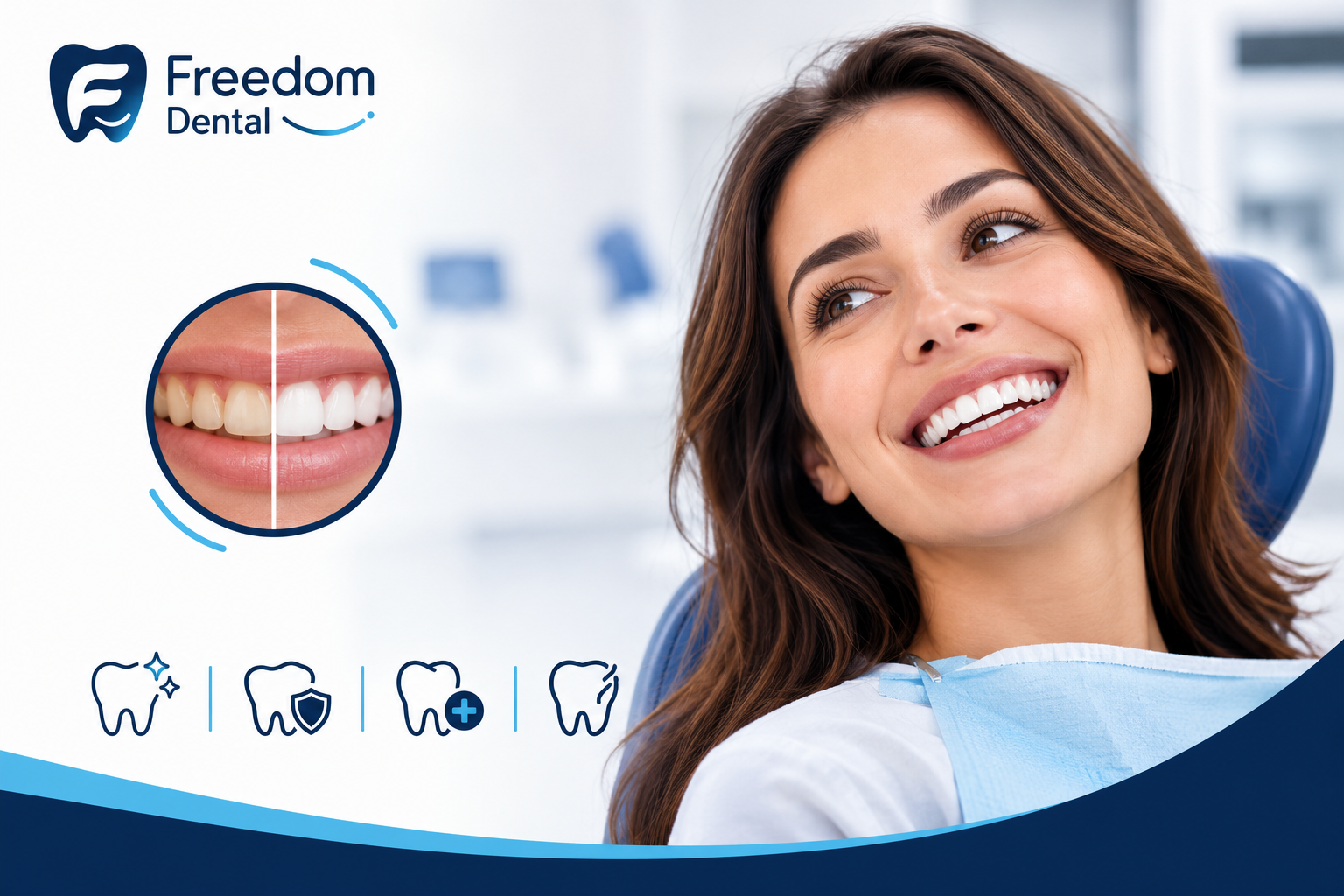
Professional teeth whitening is one of the most effective options for people looking to improve the colour of their natural teeth.
At Freedom Dental Clinic, professional teeth whitening in Dublin is tailored to the patient's smile and dental needs. The treatment is designed to brighten stained or discoloured teeth while using professional-grade whitening systems.
Professional whitening can offer several advantages over random over-the-counter products:
A dental professional can assess your teeth before treatment.
The whitening approach can be tailored to your needs.
Results can be more noticeable and even.
Your dentist can help reduce the risk of unnecessary sensitivity.
Existing dental problems can be identified before cosmetic treatment.
If you are considering whitening, it is important to understand that whitening works on natural teeth. Crowns, veneers, fillings and other restorations may not change colour in the same way as natural enamel.
You can learn more about the clinic's professional Teeth Whitening treatment before deciding which option is right for you.
How to Get Rid of White Patches and Marks on Teeth?
Not all tooth discolouration is yellow or brown. Some people notice white patches on their teeth or small white marks that stand out against the rest of the enamel.
If you are searching for how to get rid of white patches on teeth or how to get rid of white marks on teeth, it is important not to assume that whitening is the solution.
White patches can have different causes.
Enamel Hypomineralisation
Some white areas occur because a section of enamel has a different mineral content. These areas may look noticeably whiter than the surrounding tooth.
Fluorosis
Dental fluorosis can cause white lines, spots or patches on teeth. It usually develops while teeth are forming during childhood.
Early Enamel Changes
White spots can sometimes be associated with changes in the enamel caused by plaque and acid exposure. This is one reason why persistent white marks should be assessed by a dentist.
Previous Trauma or Developmental Changes
A tooth may develop a white or differently coloured area following trauma or other changes while the tooth was developing.
Can Teeth Whitening Remove White Spots?
Not necessarily.
In some cases, whitening can actually make existing white spots temporarily appear more noticeable because the surrounding tooth becomes lighter.
The appropriate treatment depends on the underlying cause. Depending on the diagnosis and severity, options may include monitoring, improving oral hygiene, professional cleaning, cosmetic bonding or other dental treatments.
For patients with more noticeable aesthetic concerns, treatments such as composite bonding or dental veneers may sometimes be considered after a professional assessment.
Common Mistakes That Affect Teeth Whitening Results
If you want your teeth to stay bright, avoid some of the common mistakes people make when trying to whiten their smile.
Using Whitening Products Too Frequently
More whitening does not necessarily mean better whitening. Overusing whitening products can increase tooth sensitivity and may irritate the gums.
Using Abrasive Home Remedies
Some online whitening hacks involve abrasive substances that can damage enamel when used incorrectly or excessively.
Your enamel does not grow back once it has been permanently worn away, so aggressive DIY whitening is not worth the risk.
Ignoring Existing Dental Problems
Whitening should not be used to hide dental problems.
If you have tooth pain, cavities, gum problems, significant sensitivity or unexplained changes in tooth colour, you should have your teeth checked before starting cosmetic treatment.
Expecting Whitening to Change Dental Restorations
Whitening affects natural tooth structure. Existing crowns, veneers and fillings may remain their original colour.
If you have visible restorations and want to change the overall appearance of your smile, your dentist can explain whether another cosmetic treatment would be more appropriate.
Not Maintaining the Results
Whitening results are not necessarily permanent. Your teeth can gradually become stained again through normal eating and drinking habits.
Maintaining good oral hygiene and limiting frequent exposure to staining substances can help your smile stay brighter for longer.
Is Freedom Dental Clinic the Best Choice for Teeth Whitening in Dublin?
Choosing a dental clinic for whitening is about more than simply finding the cheapest treatment. You want a professional assessment, an appropriate treatment plan and guidance based on your individual teeth.
At Freedom Dental Clinic, patients can access professional teeth whitening in Dublin alongside a range of cosmetic and general dental treatments.
The clinic provides treatments including professional dental cleaning, dental veneers, composite bonding, dental crowns and bridges, dental implants and orthodontic treatments.
This can be particularly useful if your smile concerns are not caused by staining alone. For example, if you have chipped teeth, uneven tooth colour, white marks or damaged teeth, your dentist can assess your smile and discuss the most appropriate options.
Before whitening, a dental examination can also help identify issues that may need treatment first.
If you are ready to discuss your options, you can book a dental appointment with Freedom Dental Clinic in Dublin and speak with the dental team about your smile goals.
How to Maintain White Teeth After Whitening
Once you have achieved a brighter smile, maintaining the result is important.
Maintain Good Oral Hygiene
Brush twice a day with fluoride toothpaste and clean between your teeth regularly.
Schedule Professional Dental Cleaning
Professional cleaning can remove plaque and deposits that build up over time. Regular cleaning is also important for maintaining healthy gums and teeth.
Be Careful With Staining Drinks
Coffee, tea, red wine and other strongly coloured drinks can contribute to staining. Reducing their frequency can help maintain a brighter appearance.
Don't Smoke
Smoking can quickly contribute to yellow and brown tooth staining, so avoiding tobacco is one of the most effective ways to protect the appearance of your smile.
Follow Your Dentist's Advice
If you have undergone professional whitening, follow the aftercare recommendations provided by your dental team.
Conclusion
If you are wondering how to get white teeth, the safest approach is to understand what is causing the discolouration before choosing a whitening method.
Good brushing, flossing, professional cleaning and healthier lifestyle habits can help maintain a clean and brighter-looking smile. For more noticeable staining, professional teeth whitening can provide a controlled and effective cosmetic option.
However, if you have white patches or white marks on your teeth, whitening may not be the right solution. These changes can have different causes and should be assessed by a dentist before treatment.
At Freedom Dental Clinic in Dublin, professional teeth whitening is available alongside a range of cosmetic and general dental treatments. A consultation can help determine whether whitening or another treatment is the most suitable way to achieve the smile you want.