

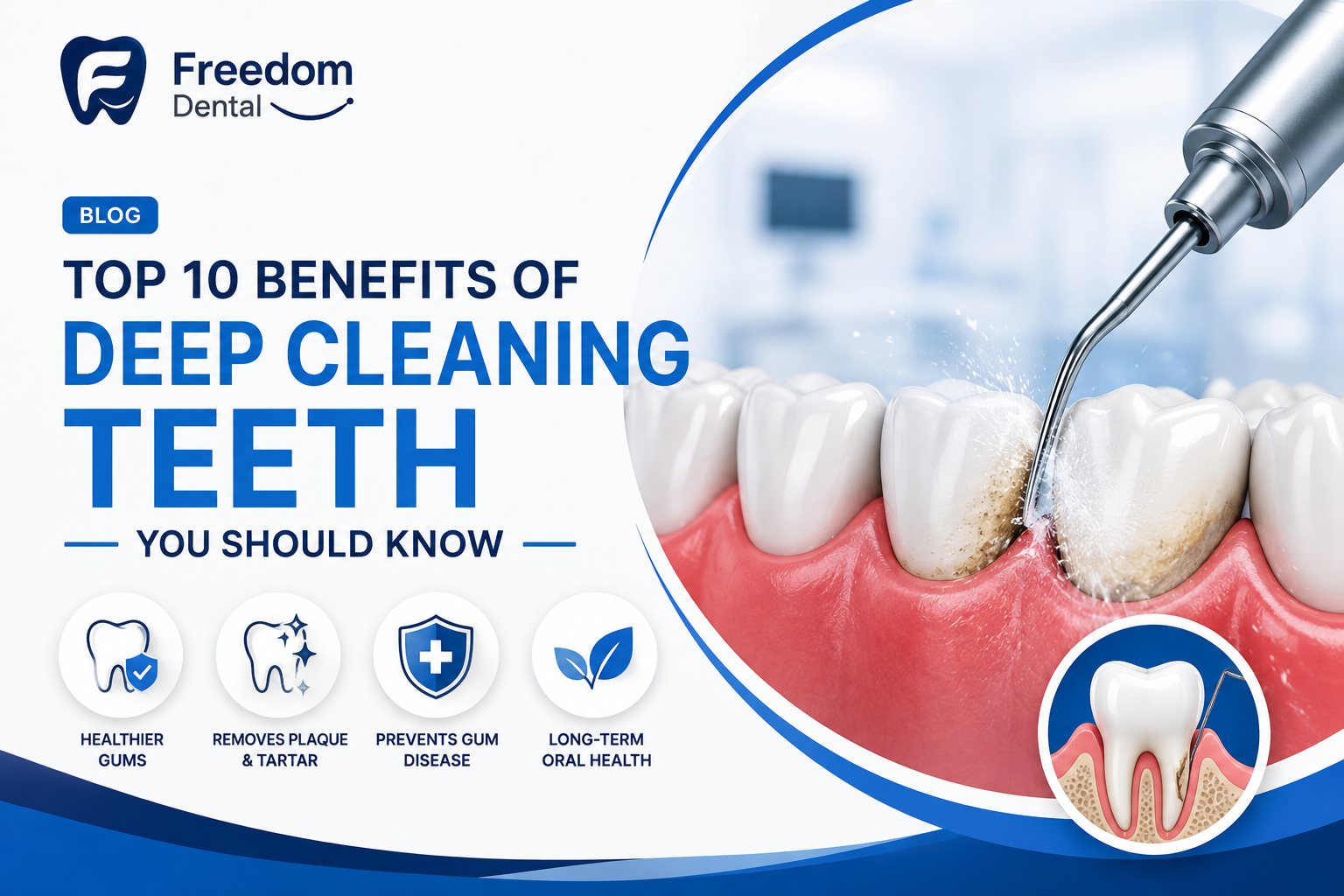
Top 10 Benefits of Deep Cleaning Teeth You Should Know
If you have bleeding gums, persistent bad breath, gum swelling or deep spaces between your teeth and gums, your dentist may recommend a deep dental cleaning.
Unlike a regular dental cleaning, deep cleaning focuses on removing plaque and tartar from below the gumline. The treatment is commonly known as scaling and root planing (SRP) and is used to treat gum disease when pockets around the teeth have become too deep for routine cleaning.
But what exactly does deep cleaning do, and is it really worth it?
Let's look at the main benefits, what to expect afterwards and how often you may need it.
What Is Deep Cleaning Teeth?
Deep cleaning teeth is a professional dental treatment designed to clean areas below the gumline that cannot be reached effectively with normal brushing or a standard cleaning.
It usually involves two steps:
Scaling: Removing plaque and hardened tartar from the tooth surfaces, including below the gumline.
Root planing: Smoothing the exposed root surfaces to help remove bacterial deposits and support healthier gum attachment.
Your dentist may recommend deep cleaning when gum disease has created periodontal pockets around the teeth.
It is important to understand that deep cleaning is not simply a more thorough version of a routine cleaning. It is a treatment used when there is a clinical need, particularly in cases of periodontitis.
Why Is Deep Cleaning Teeth Needed?
Healthy gums fit closely around the teeth. When gum disease develops, inflammation can cause the gums to pull away from the teeth and create pockets.
These pockets can trap plaque and tartar where normal brushing cannot reach effectively.
If gum disease progresses without treatment, it can damage the tissues and bone supporting the teeth. Deep cleaning can remove deposits from these deeper areas and is an established nonsurgical treatment for periodontitis.
Your dentist may recommend it if you have symptoms such as:
Persistent bleeding gums
Swollen or red gums
Deep periodontal pockets
Persistent bad breath
Gum recession
Significant tartar buildup
Signs of periodontitis
A dental examination is necessary to determine whether deep cleaning is appropriate.
Top 10 Benefits of Deep Cleaning Teeth
1. Removes Tartar Below the Gumline
One of the biggest advantages of deep cleaning is its ability to remove hardened tartar from areas below the gums.
Regular brushing cannot remove tartar once it has hardened. Professional instrumentation is required to remove these deposits.
2. Helps Treat Gum Disease
Deep cleaning is commonly used as a nonsurgical treatment for periodontitis.
By removing plaque and calculus from the tooth and root surfaces, scaling and root planing can help control the bacterial deposits contributing to gum disease. The ADA recommends considering scaling and root planing as an initial treatment for chronic periodontitis.
3. Helps Reduce Gum Inflammation
When plaque and tartar remain around the gums, they can continuously irritate the surrounding tissue.
Removing these deposits can create a cleaner environment for the gums to heal.
You may notice less redness, swelling and bleeding as your gums recover.
4. Helps Reduce Deep Gum Pockets
Gum disease can create spaces between the teeth and gums known as periodontal pockets.
Deep cleaning targets the deposits inside these pockets. Following treatment, your dentist can reassess the gums and measure the pocket depths to monitor healing.
5. Can Help Protect the Supporting Structures of Your Teeth
Advanced gum disease can affect the tissues and bone that support your teeth.
Treating periodontitis early and controlling the bacterial infection can help protect your periodontal health. Deep cleaning is one of the nonsurgical treatments used to manage the condition.
6. Can Improve Bad Breath Caused by Gum Problems
Persistent bad breath can sometimes be associated with plaque, tartar and gum disease.
Removing bacterial deposits from around and beneath the gum line may help address one potential source of unpleasant breath.
However, bad breath can have many causes, so persistent symptoms should be assessed by a dentist.
7. Can Make Your Gums Healthier
After deep cleaning, your gums may gradually become less swollen and irritated as they heal.
The treatment itself is only one part of the process. Good daily oral hygiene is essential for maintaining the results and preventing gum disease from returning.
8. Can Improve Your Overall Oral Hygiene
Deep pockets can make it difficult to keep the area around your teeth clean.
After professional treatment, your dentist or hygienist can show you how to improve brushing and interdental cleaning so you can maintain healthier gums at home.
The ADA recommends brushing twice daily with a soft brush and cleaning between your teeth every day as part of ongoing gum care.
9. May Help Reduce Gum Bleeding
Bleeding during brushing or flossing is often associated with inflamed gums.
When gum disease and tartar buildup are contributing to the problem, professional cleaning combined with improved home care can help improve gum health.
If your gums continue to bleed after treatment, speak with your dentist so the cause can be reassessed.
10. Can Help Prevent Gum Disease From Progressing
One of the most important benefits of treating gum disease is controlling it before it causes more significant damage.
Deep cleaning is not a permanent cure on its own. Gum disease requires ongoing maintenance, including effective home care and regular dental monitoring.
How Long Does It Take to Recover After Deep Cleaning?
Recovery varies from person to person and depends on how extensive the treatment was.
It is normal to experience some:
Gum tenderness
Mild discomfort
Gum swelling
Temporary bleeding
Increased tooth sensitivity
The ADA notes that discomfort may last for a day or two, while tooth sensitivity can continue for up to around a week after scaling and root planing.
Your dentist may give you specific aftercare instructions based on your treatment.
What Can You Do for Sensitive Teeth After Deep Cleaning?
If you experience sensitive teeth after deep cleaning, try to:
Follow your dentist's aftercare instructions.
Use a soft-bristled toothbrush.
Avoid extremely hot or cold foods if they trigger sensitivity.
Continue cleaning your teeth gently.
Ask your dentist whether a desensitising toothpaste would be suitable.
Do not stop brushing because your gums feel sensitive. Keeping the area clean is important for recovery.
If sensitivity is severe, persistent or getting worse, contact your dentist.
How Often Should You Get a Deep Dental Cleaning?
There is no universal schedule for deep cleaning teeth.
Unlike routine dental cleaning, scaling and root planing is generally recommended when there is a specific periodontal need. Your dentist will assess your gum health, pocket depths and other findings before deciding whether treatment is necessary.
After periodontal treatment, you may also need ongoing periodontal maintenance at intervals determined by your dentist.
This means you should not book a deep cleaning simply because you have not had one recently. It should be based on your dental examination.
Deep Cleaning Teeth vs Regular Dental Cleaning
These treatments are not the same.
Regular Dental Cleaning | Deep Cleaning |
|---|---|
Mainly removes plaque and tartar from accessible surfaces | Removes deposits above and below the gumline |
Usually used for routine preventive care | Used when periodontal disease requires deeper treatment |
Generally more comfortable | May involve local anaesthetic |
Usually completed in a routine appointment | May require more than one appointment |
Does not usually involve root planing | Includes root planing when indicated |
The appropriate treatment depends on your gum health and the findings of your dental examination.
How Freedom Dental Clinic Helps Improve Your Gum Health with Deep Cleaning
If you are experiencing bleeding gums, swelling, persistent bad breath or other signs of gum disease, professional assessment is an important first step.
At Freedom Dental Clinic, your dentist can assess the condition of your teeth and gums and determine whether a regular cleaning or a deeper periodontal treatment is more appropriate.
If deep cleaning is recommended, your dentist can explain the procedure, what you should expect afterwards and how to maintain your gum health at home.
Professional dental cleaning can also be combined with advice on brushing, interdental cleaning and ongoing dental care to help reduce the risk of gum disease returning.
If you're looking for deep cleaning teeth in Dublin, you can contact Freedom Dental Clinic to arrange an assessment.
How to Maintain Your Results After Deep Cleaning
Deep cleaning can remove harmful deposits, but maintaining healthy gums depends heavily on what happens afterwards.
Brush Twice a Day
Use a soft bristled toothbrush and fluoride toothpaste twice a day.
Clean Between Your Teeth
Use floss or interdental brushes every day to remove plaque from areas your toothbrush cannot reach.
Avoid Smoking
Smoking is a major risk factor for gum disease and can make maintaining healthy gums more difficult.
Attend Your Follow-Up Appointments
Your dentist may want to reassess your gums after treatment and monitor pocket depths and healing.
Follow Your Personalised Maintenance Plan
Some patients with periodontal disease require ongoing professional maintenance. Your dentist will recommend the appropriate frequency based on your individual condition.
Conclusion
Deep cleaning teeth can be an important treatment for patients with gum disease and deeper periodontal pockets.
By removing plaque and tartar from below the gumline and smoothing affected root surfaces, scaling and root planing can help control periodontal disease and support healthier gums.
However, deep cleaning is not something everyone needs. Your dentist should first assess your gums and determine whether the treatment is appropriate.
If you have bleeding gums, gum swelling, persistent bad breath or signs of deep gum pockets, don't wait for the problem to progress. A professional assessment can help you understand what is happening and what treatment your gums actually need.