


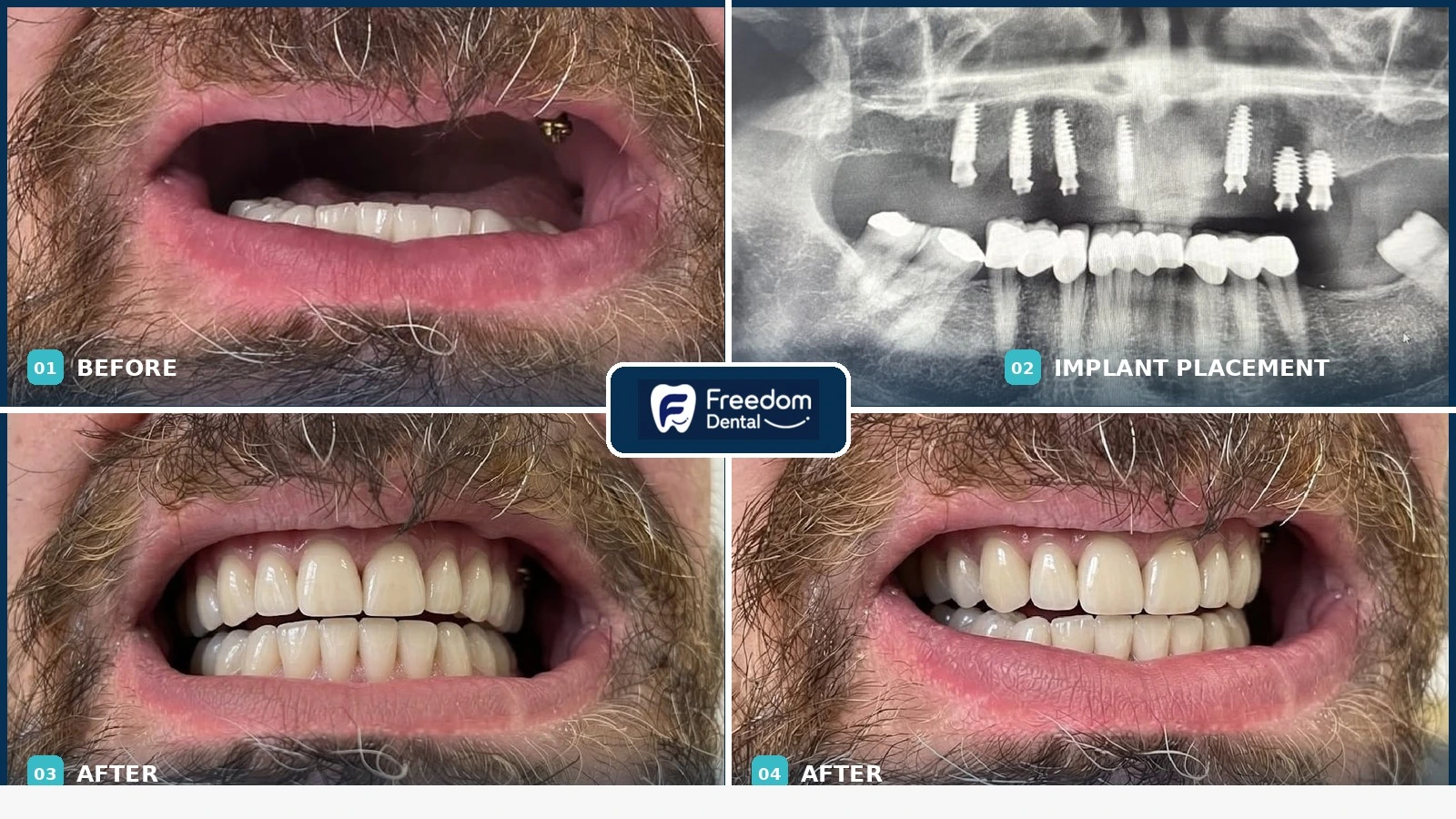
A Full Upper Smile Restored with an Implant Supported Bridge
Losing all the upper teeth had affected many aspects of our patient’s daily life. Speaking, eating and laughing no longer felt as comfortable as before, while concerns about denture movement made it difficult to smile confidently.
The patient visited Freedom Dental to explore a more stable alternative to a removable denture. Following a detailed assessment, Dr Rabie Elbalasy recommended an implant supported bridge in Dublin, using strategically positioned dental implants and a custom-milled zirconia restoration to rebuild the complete upper smile.
The Patient’s Initial Concern
The patient had lost all the teeth in the upper arch and had previously relied on a removable denture. Although dentures can be suitable for many patients, this patient experienced discomfort and remained concerned about movement during daily activities.
The primary concerns included:
Discomfort while wearing the removable denture
Worry about movement when eating or speaking
Difficulty smiling and laughing confidently
Reduced comfort during everyday activities
A preference for a fixed tooth-replacement option
The patient wanted a secure solution that could restore function while creating a balanced and natural-looking upper smile.
Choosing an Implant Supported Bridge
Replacing a complete arch of teeth requires detailed examination and careful planning. Dr Rabie Elbalasy assessed the patient’s gums, jawbone, bite, medical history and suitability for dental implant treatment.
Following the assessment, an implant-supported restoration was selected as the treatment option that best matched the patient’s clinical needs and preference for fixed teeth.
An implant supported bridge differs from a conventional dental bridge because it is supported by implants placed in the jaw rather than by neighbouring natural teeth.
Learn more about dental implants at Freedom Dental.
Planning the Upper Implant Supported Bridge
The treatment plan involved placing dental implants at carefully selected positions within the upper jaw. These implants would create the foundation for a fixed, custom-milled zirconia bridge.
The main treatment goals were to:
Replace the complete upper arch of missing teeth
Improve stability compared with a removable denture
Restore comfortable everyday function
Create appropriate contact with the lower teeth
Produce a balanced and natural-looking smile
Design a restoration that could be cleaned and maintained
The number and position of dental implants required for an implant-supported bridge vary between patients and must be determined through individual clinical assessment.
The Treatment Process
The patient’s treatment was completed through several carefully planned stages:
Comprehensive dental and medical assessment
Examination of the gums, jawbone and bite
Diagnostic imaging and digital treatment planning
Strategic placement of the dental implants
Healing and integration of the implants
Collection of accurate records for the restoration
Custom design and milling of the zirconia bridge
Assessment of the fit, appearance and bite
Fitting of the completed implant-supported bridge
Aftercare and maintenance guidance
Treatment and healing times vary according to the patient’s bone condition, general health and response to implant placement.
Why Was a Zirconia Bridge Selected?
Zirconia combines strength with good aesthetic potential, making it suitable for selected implant-supported restorations.
The custom-milled zirconia bridge was designed around the patient’s facial features, bite and available restorative space. Its shape, proportions and shade were planned specifically for the patient rather than using a standard appearance.
A zirconia implant bridge may provide:
A fixed upper restoration
Carefully planned tooth proportions
A natural-looking shade
Strength for everyday function
A surface that can be maintained with appropriate care
The suitability of zirconia depends on the patient’s bite, implant position and individual clinical requirements.
The Final Result
The completed implant supported bridge in Dublin restored the patient’s full upper smile and provided greater stability than the previous removable denture.
The final result included:
A complete fixed upper restoration
Improved stability during speaking and eating
More balanced tooth proportions
A natural-looking smile designed for the patient
Greater confidence when laughing and speaking
Reduced concern about denture movement
The treatment was not simply about replacing missing teeth. It also helped the patient feel more comfortable and confident during everyday social situations.
Maintaining an Implant Supported Bridge
An implant-supported zirconia bridge requires daily cleaning and ongoing professional care. Although the zirconia teeth cannot develop decay, plaque can still collect around the implants and affect the surrounding gum tissues.
Patients should:
Clean around and underneath the bridge every day
Use appropriate interdental cleaning tools
Attend regular implant examinations
Arrange professional cleaning when recommended
Avoid smoking
Report any movement or discomfort promptly
Follow the maintenance instructions provided by the dentist
Regular appointments allow the dental team to assess the implants, gums, bite and condition of the bridge.
Is an Implant Supported Bridge Right for You?
An implant-supported bridge may be considered if you have lost several teeth, a complete arch of teeth or experience ongoing difficulties with removable dentures.
However, suitability depends on factors including:
General and oral health
Gum condition
Available jawbone
Medical history
Smoking status
Bite and restorative space
Ability to maintain the implants and bridge
A clinical examination and diagnostic imaging are required before treatment can be recommended.
If you are considering an implant supported bridge in Dublin, book an appointment with Freedom Dental or call 085 830 0289 or 01 872 9569.