


Correcting Crowded Teeth with Orthodontic Treatment
For years, our patient felt self-conscious about the alignment of her teeth. She often held back her laughter and covered her mouth when speaking or smiling because she did not feel comfortable showing her teeth.
When she decided she was ready for a change, she visited Freedom Dental to explore her orthodontic treatment options.
After a detailed assessment, a personalised treatment plan was created to improve the position of her teeth and produce a straighter, more balanced smile.
The Initial Concern
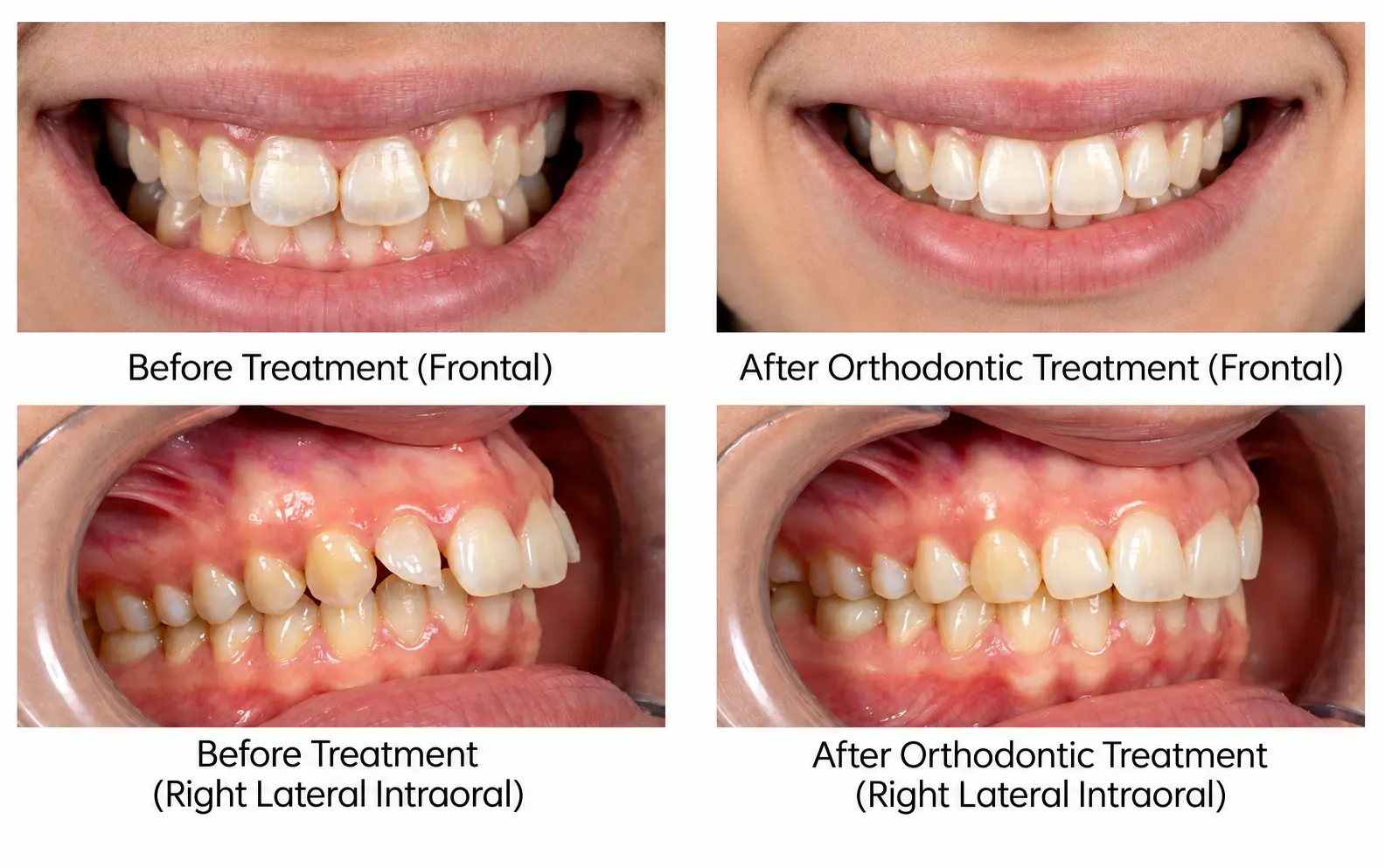
Before treatment, the patient had noticeable crowding and misalignment affecting both the appearance of her smile and the way her upper and lower teeth met.
The clinical photographs show:
Crowding in the upper and lower front teeth
Teeth positioned outside the natural dental arch
Uneven alignment across the visible smile
An imbalanced relationship between the upper and lower teeth
Reduced confidence when smiling
The treatment goals were to improve dental alignment, create sufficient space for the crowded teeth and achieve a more balanced bite.
Planning the Orthodontic Treatment
Orthodontic treatment is not the same for every patient. Before beginning, the dental team assessed the position of the teeth, the bite and the available space within the dental arches.
A personalised plan was then developed to move the teeth gradually and safely into improved positions.
The patient understood that orthodontic treatment would require time, patience and consistent attendance at her scheduled appointments.
Learn more about dental braces at Freedom Dental.
The Treatment Process
The treatment journey involved:
Assessing the alignment of the teeth and the patient’s bite.
Taking the necessary clinical photographs and dental records.
Developing an orthodontic plan based on the patient’s individual needs.
Gradually moving the crowded and misaligned teeth into better positions.
Monitoring progress through regular review appointments.
Making adjustments when clinically required.
Completing the active treatment once the planned alignment had been achieved.
Providing retention guidance to help maintain the result.
Orthodontic tooth movement happens gradually. Attending appointments and following the dentist’s instructions were important parts of keeping the treatment on track.
The Final Result
Following orthodontic treatment, the patient’s teeth appeared noticeably straighter and more evenly positioned.
The final photographs demonstrate:
Improved alignment of the front teeth
Reduced dental crowding
A more even and balanced smile
Improved relationship between the upper and lower teeth
Greater confidence when smiling
When the braces were removed, the patient could finally see the result of the time and commitment she had invested in her treatment. Her new smile gave her the confidence to laugh and speak without feeling the need to conceal her teeth.
Maintaining the Result After Braces
Teeth can naturally move after orthodontic treatment. Retainers are therefore an important part of maintaining the new alignment.
Patients should wear their retainers according to their dentist’s instructions and continue attending routine dental examinations. Good brushing, interdental cleaning and professional dental care can also help protect the teeth and gums following treatment.
Could Orthodontic Treatment Help Your Smile?
Dental braces may help correct crowded teeth, spacing and selected bite concerns. However, the most suitable treatment depends on the position of your teeth, your bite, oral health and individual goals.
A clinical assessment is needed to determine which orthodontic option may be appropriate for you.
To discuss your options, book an appointment with Freedom Dental or call 085 830 0289 or 01 872 9569.